Ture Sjölander
Monument, 1967 – famous faces bent in the television signal
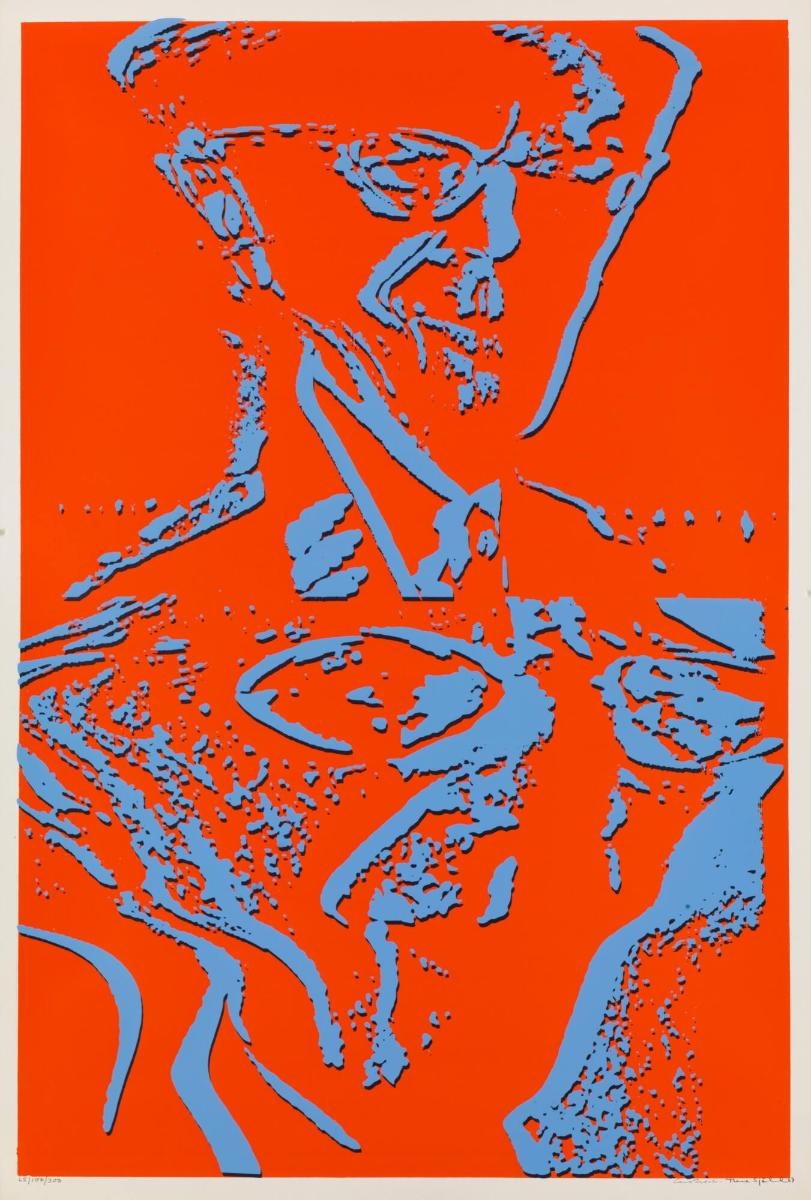
In January 1968 Swedish television broadcast a programme in which some of the best-known faces in the world came apart. The Beatles, Charlie Chaplin, Picasso, the Mona Lisa and the King of Sweden appeared on screen and then began to ripple, stretch and dissolve. The American critic Gene Youngblood, who described the programme two years later, wrote that the transformations were "at first subtle, like respiration, then increasingly violent until little remains of the original icon", and that each image finally "disintegrates into a constellation of shimmering video phosphors". He called the result "an oddly beautiful collection of image sequences unlike any other video art".1
The programme was called Monument, and it was made by the artists Ture Sjölander and Lars Weck with Bengt Modin, a video engineer at Sveriges Radio, the Swedish Broadcasting Corporation.1 Its pictures were not distorted afterwards. They were bent at the moment they became a television signal.
Bending the signal
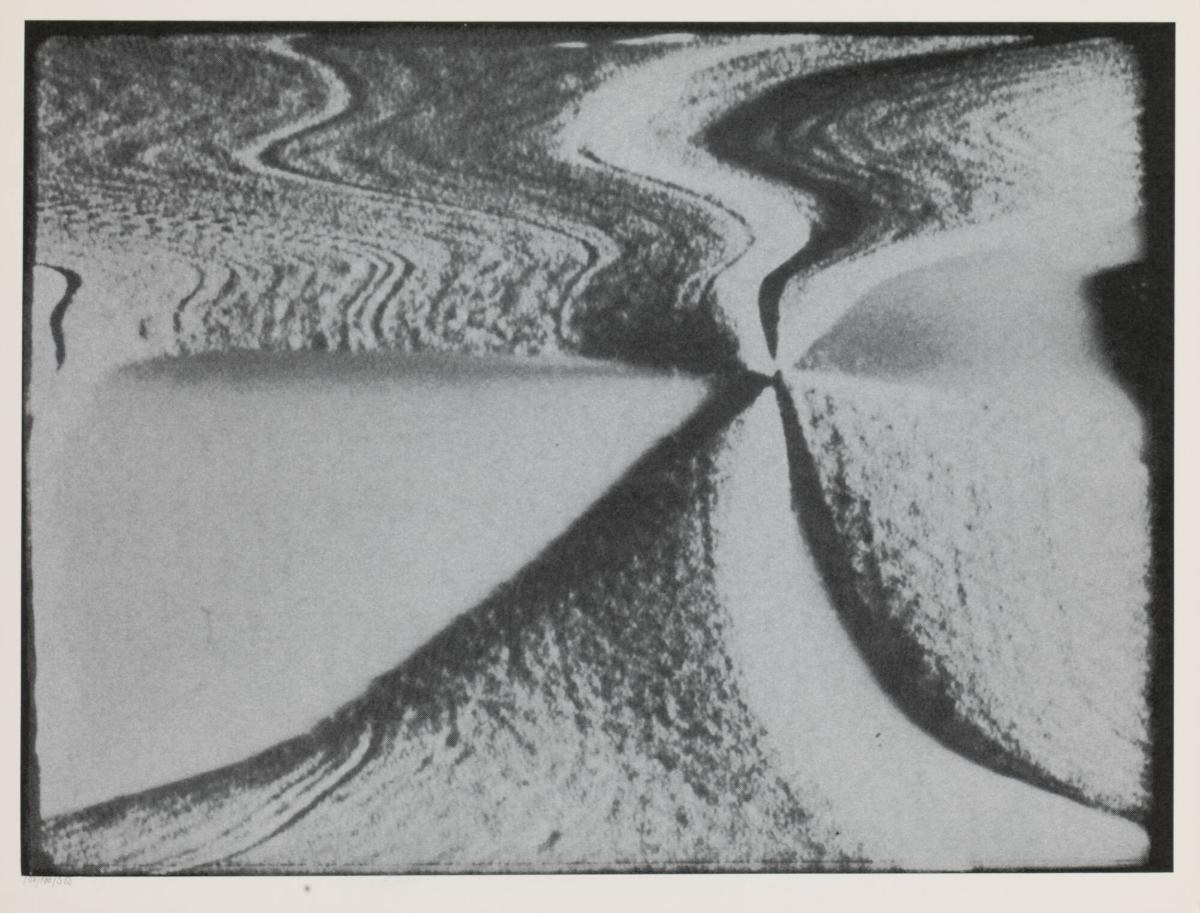
Monument was made in the autumn of 1967 from film clips and slides of famous people and paintings, the "monuments" of world culture, and it was made in black and white. To broadcast a film, Swedish television used a flying-spot telecine: the film was projected towards a photocell, with a scanned raster as the source of light, and the point of light, in Youngblood's words, "scans the screen fifty times per second". Sjölander, Weck and Modin fed tones from waveform generators into the circuit that steered the point of light, changing the frequency and amplitude of its sweep. The picture warped in the very process of becoming video, before any videotape existed. The result was recorded, filmed off a screen and edited by Sjölander and Weck into its final form.1
Youngblood compared the method to those used by Nam June Paik and others, with one difference: the Swedish group intervened at an earlier stage, while the image was still being turned into signal.1 The source material mattered as much as the technique. Youngblood writes that the pictures in the film were so well known to the public that they had been "invested with symbolic meaning".1
TIME, 1966
Monument was not Sjölander's first experiment of this kind. With Bror Wikström he had made TIME, a programme commissioned by Swedish television. The sources date it variously to 1965–66 and 1966, with broadcasts until 1969. In Sjölander's own account, a video synthesizer was temporarily built for it in spite of the technicians' doubts, and the same technical set-up was used for Monument a year later.3
Whether TIME or Monument came first is less clear than it may seem. Sjölander's pages quote a statement by Björn Hallström from 1976, which itself dates TIME to 1965–66, that the programme "seems to be the first distortion of video-scan-line rasters achieved by applying tones from wave form generators". The same pages include a letter from Rutt Electrophysics of 12 March 1974 that says the same of Monument, hedged ("From literature available I gather") and in a letter written to ask Sjölander for documentation.3 Both are documents published by Sjölander himself, and we have not found an independent source that settles it. Youngblood's account of Monument, written in 1970, is the earliest independent description of the technique we know of.1
An image generator
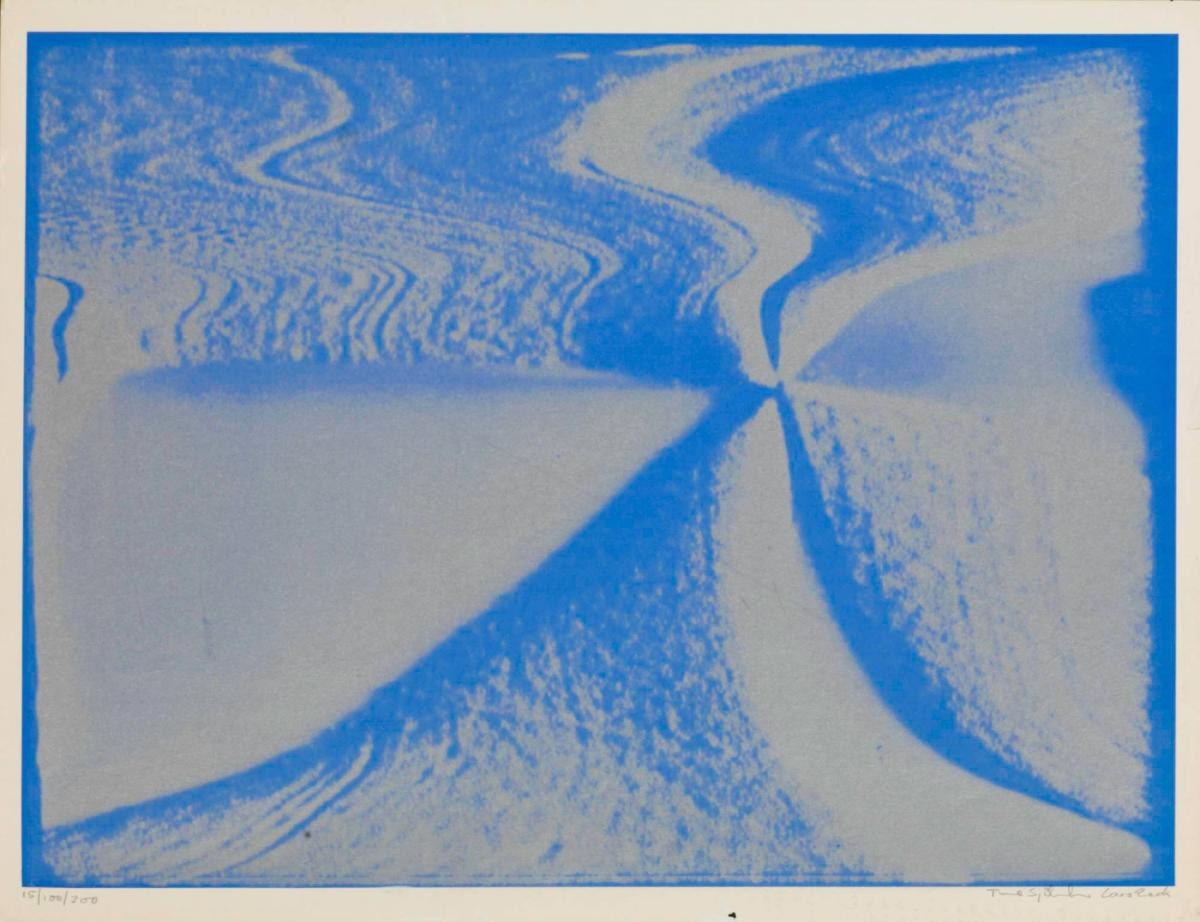
What happened to Monument after the broadcast is perhaps its most modern feature. According to Youngblood, the programme was later seen across Europe, Asia and the United States, and it became "an image-generator": newspapers, magazines, posters, record albums and even textile factories used its pictures. The painter Sven Höglund, who entered the project after the film was finished, made oil paintings from them. He called them another phase of the same "experiment in communication". For him the common denominator was the mass-media picture, above all the television picture.1
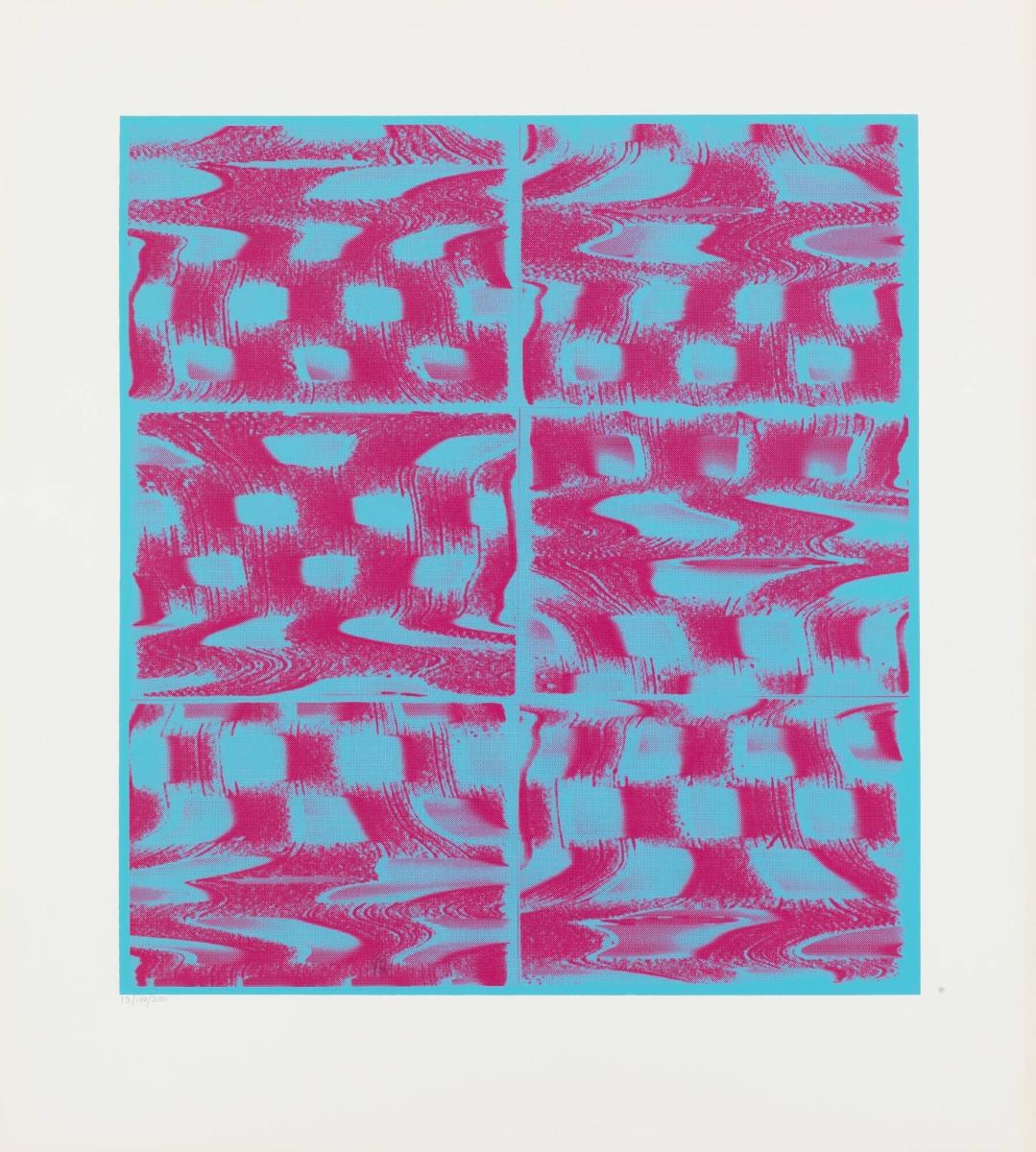
The silkscreen prints show how this worked. Moderna Museet holds a series of them from 1967, numbered in the form "51/100/300".4 On the television screen Monument was black and white. On paper it came out in colour, as in the sheets shown here: pale blue on orange, magenta on turquoise. A still from a television programme became a print, and the same distorted image could hang in a museum, sit on a record sleeve and run across a length of fabric. The work about mass-media images circulated as a mass-media image, and changed colour on the way.
The museum also holds a print by Sjölander alone, Gustav VI Adolf (1967), numbered "140/300". It was given to the national collection in the year it was made by the county council of Västernorrland.5 The king is one of the faces in Monument, but the museum does not connect the print to the series.
After Monument
Sjölander was born in 1937.6 In his own account, he received the Royal Swedish Academy of Fine Arts' project grant in 1975 for his electronic works, and from 1979 to 1986 he led Video-Nu in Stockholm, an artists' laboratory for new electronic technology.7 Moderna Museet records him as living in Australia.6 Lars Weck lived from 1938 to 2015.4 Moderna Museet holds 24 works by Sjölander, most of them prints from Monument, and one installation, Automatic Light Painting on Canvas with a Coin (1966).6, 8
Monument was made with analog television equipment, tones and an engineer who let artists into the circuit. It belongs with the other Swedish experiments of the period, told in Computer Art in Sweden, in which artists made new images on technology that belonged to someone else, in this case the national broadcaster.
In JAEV's reading, Monument deserves to be better known, as one of the early works in which artists worked directly on the television signal. It is visually striking, it was seen far beyond Sweden, and it understood something early: that a picture of a famous face is never only a picture, but something that travels, is copied and changes on the way. Sjölander and Weck made that journey the work.
About the images: we have not been in contact with Ture Sjölander or the heirs of Lars Weck. The prints are shown with credit to the artists and to Moderna Museet, which holds them. If the artist, Lars Weck's heirs or the museum would rather they were not shown, we will remove them.
Further reading
- Gene Youngblood, Expanded Cinema (1970), pages 331–334, on Monument. The same passage is on UbuWeb's page for the film, with a video described as extracts.
- Moderna Museet, Stockholm: works by Ture Sjölander in the collection.
- Video History Project: Ture Sjölander, with his own documentation.
- JAEV Editorial: Computer Art in Sweden, Georg Nees.
Sources
- Gene Youngblood, Expanded Cinema. New York: E. P. Dutton, 1970, pp. 331–334 (“Ture Sjölander, Lars Weck, Sven Höglund: Video Monument in Sweden”)
- “MONUMENT 1967 by the artist Ture Sjolander and Lars Weck …”. YouTube, channel @tubeture (Ture Sjolander), uploaded 18 March 2009, 9:53
The artist's own upload. - “Ture Sjolander and Bror Wilkstrom Raster Scan Device”. Video History Project
Sjölander's own documentation of TIME. - Ture Sjölander and Lars Weck, Monument, 1967 (MOM/2011/100). Moderna Museet, Stockholm
Edition numbering (“51/100/300”) and Lars Weck's dates, 1938–2015. - Ture Sjölander, Gustav VI Adolf, 1967 (NMG 272/1967). Moderna Museet, Stockholm
- Ture Sjölander, works in the collection. Moderna Museet, Stockholm
The artist's dates and country of residence, the number of works in the collection, and titles and years. - “Ture Sjolander”. Video History Project
Sjölander's own CV. - Ture Sjölander, Automatic Light Painting on Canvas with a Coin, 1966 (MOMB 110). Moderna Museet, Stockholm