Generative Art
Art made through rules, systems and processes
Generative art is art made through rules, systems and processes. The artist does not necessarily determine every line, sound or colour individually. Instead, the artist decides how the work will be made, by writing instructions, a program or a set of rules, or by building a machine, and lets that process produce the result. The artist and theorist Philip Galanter has described it as any practice in which the artist sets a system in motion and the system, with some degree of independence, contributes to the finished work.1
The view taken here is that in generative art the system is part of the artistic material, alongside paint, paper or code. That matters to JAEV because the gallery's own server is used as such a system. Works are not only shown on it; they are made on it, every day.
What a system can be
A generative work usually combines a few of these parts.
- Rules or instructions. A precise description of what to do: draw a line from here to there, repeat it ten times, turn it a few degrees each time. Rules can be written in ordinary language or in a programming language.
- Chance. A source of unpredictable choices: dice, digits from a list, or random numbers produced by a computer. Chance decides what the rules leave open.
- Repetition and variation. The same rules are run many times, and each run gives a different result. The individual results are variations of one idea.
- Series and permutations. A permutation is one of the possible ways to order or combine a fixed set of parts. Working through all of them, or many of them, gives a series in which every work belongs to the same family.
- Input. Some systems take in information from outside, such as measurements, texts or images, and turn it into form.
The artist decides which of these to use and how they work together. The result is often not one work but a family of possible works, and the artist's choices show in the limits of that family.
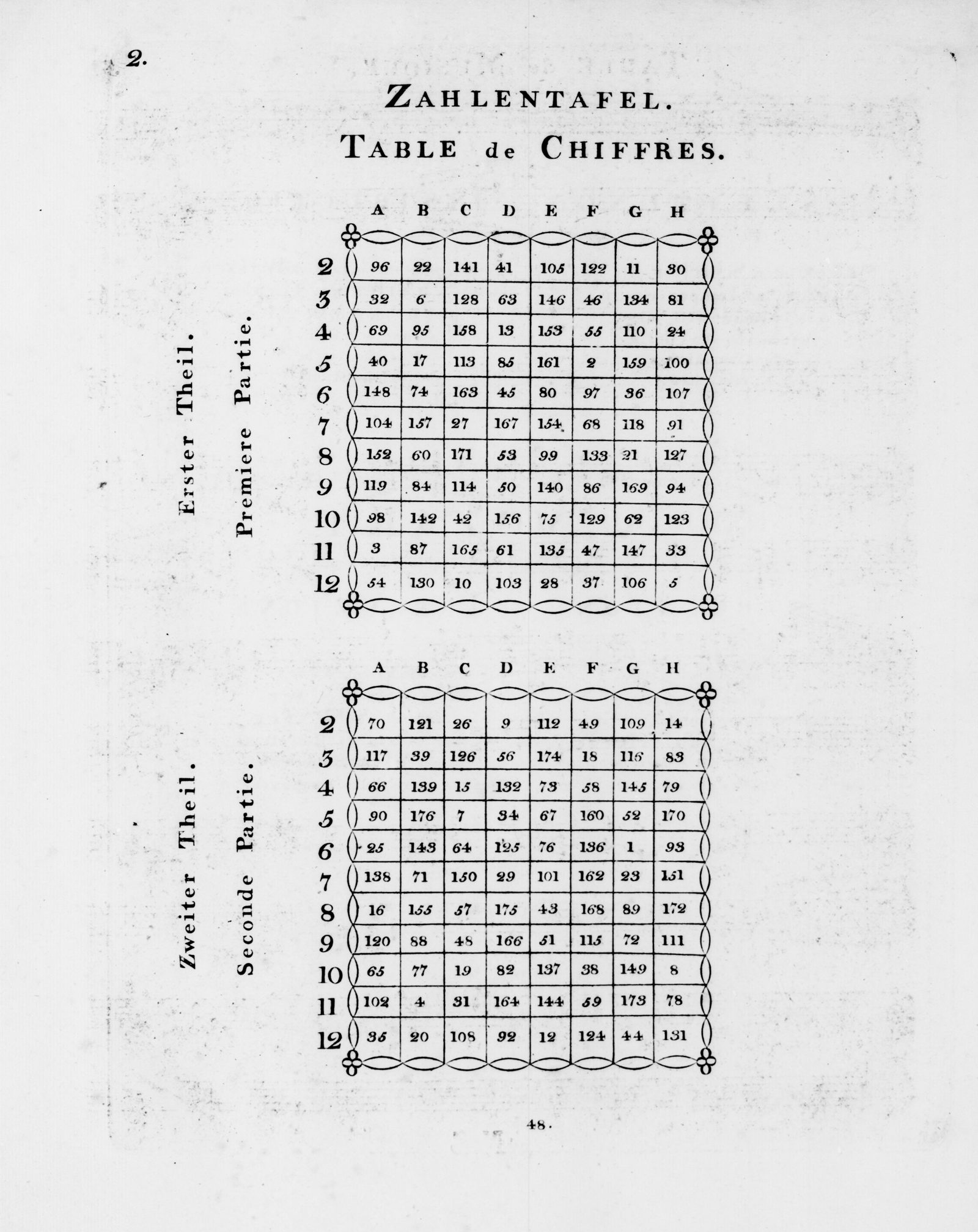
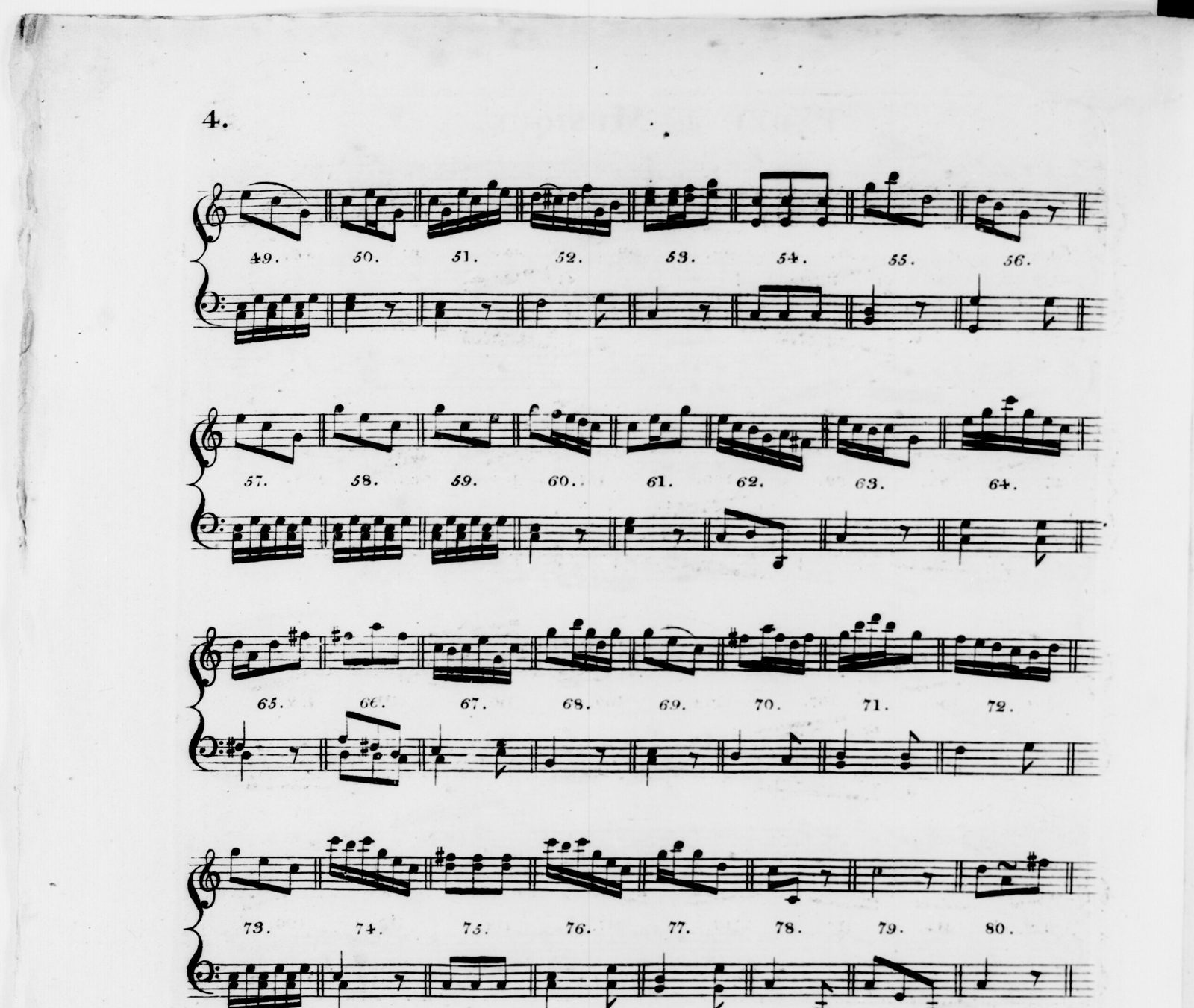
The image at the top of this page is an early example of a generative system, though not generative art in today's sense. It is the number table from a game for composing a waltz with two dice, sold by the music publisher N. Simrock in Bonn under the name of W. A. Mozart.2 Each column, A to H, is one bar. The player throws two dice and plays the bar whose number stands in the row for the total. Someone wrote the bars and the table; the dice choose the music.
.jpg)
The system as material, before the computer
In the twentieth century, some artists began to treat the system as part of the work, and sometimes as the most important part. They did so without computers.
François Morellet used chance to take decisions away from personal taste. In Répartition aléatoire de 40 000 carrés (Random distribution of 40,000 squares) from the early 1960s, the colour of each of 40,000 squares in a grid is decided by whether a digit in a telephone directory is odd or even.3 The title states the rule; the directory supplies the chance.
Sol LeWitt used instructions. In "Paragraphs on Conceptual Art", published in Artforum in 1967, he wrote that in his kind of art "all of the planning and decisions are made beforehand and the execution is a perfunctory affair. The idea becomes a machine that makes the art."4 His wall drawings exist as a diagram and a set of written instructions, and are drawn on the wall by assistants who follow them.5 LeWitt is not a generative artist in the usual sense, and chance was not the point for him. But his work made it clear that a set of instructions can be an artwork in its own right. See Sol LeWitt.
Vera Molnár worked in a similar way from 1959. She called her method a machine imaginaire, an imaginary machine: a simple program of rules and prohibitions that she carried out by hand.6, 7 When she gained access to a real computer in 1968, she already had the method. The machine took over the execution, not the idea. See Vera Molnár.
Computer art becomes public, 1965
In the 1960s computers were large, expensive machines, and access to them was mostly reserved for scientific research and the military.7 A few people who had that access began to use them for drawings, made by plotters: machines that move a pen across paper under the computer's control.
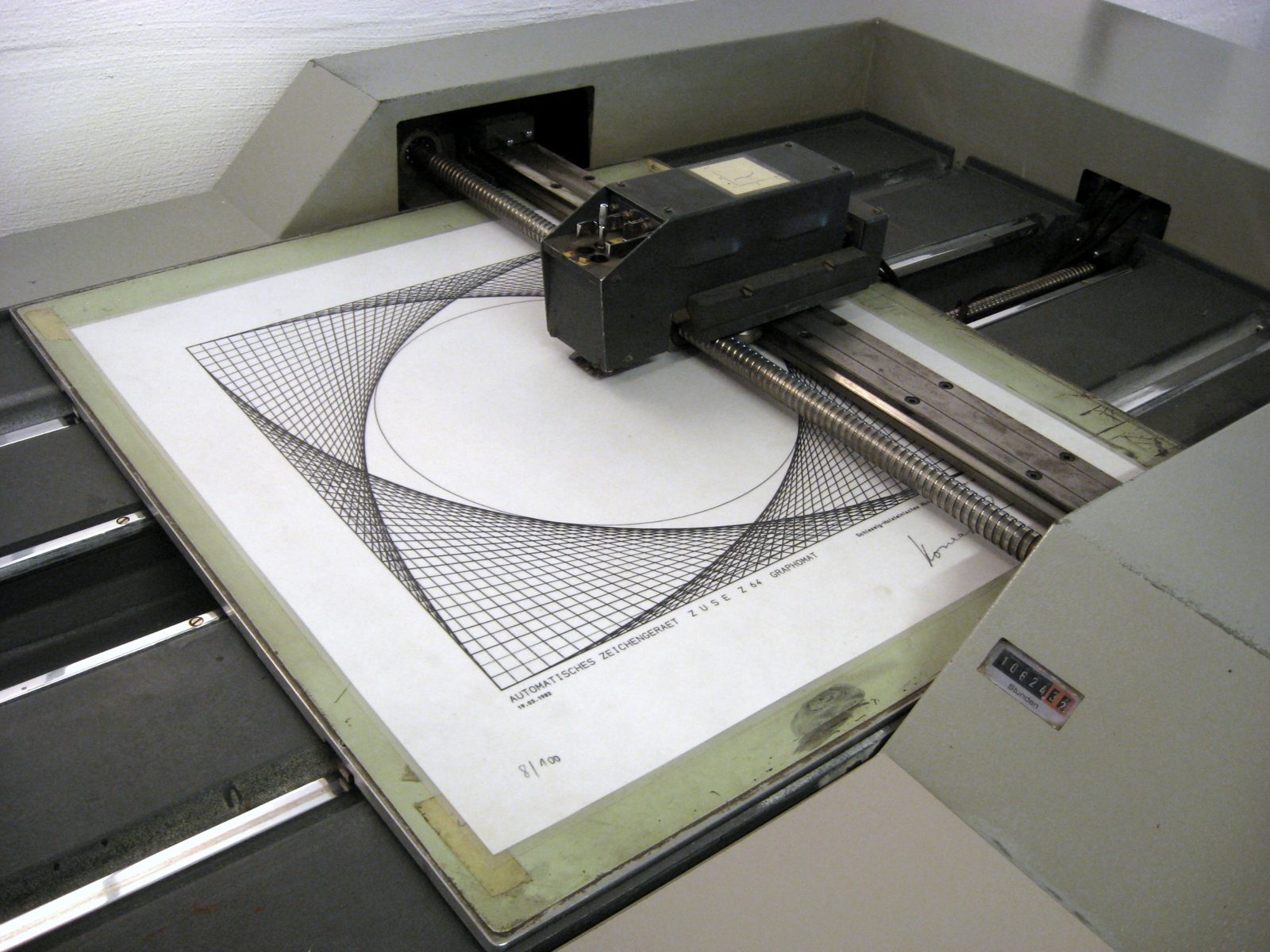

In 1965 computer-generated drawings began to appear in public exhibitions in Europe and the United States. In February, works by the mathematician Georg Nees were shown at the Technische Hochschule Stuttgart, in an exhibition opened by the philosopher Max Bense. In April, A. Michael Noll and Bela Julesz of Bell Labs showed Computer-Generated Pictures at the Howard Wise Gallery in New York. In November, Frieder Nake and Georg Nees exhibited at Galerie Wendelin Niedlich in Stuttgart.8
The word generative was already in use in this circle. Bense published a short text called "Projekte generativer Ästhetik" (Projects of generative aesthetics) in 1965, and Nees's doctoral thesis of 1969 was called Generative Computergraphik.9, 10
In 1971 the Musée d'Art Moderne de la Ville de Paris showed Manfred Mohr's Une esthétique programmée (A programmed aesthetic), which Mohr describes as the first solo exhibition of digital art in a museum.11
Software as material
For decades, working with a computer meant working where the computers were: at universities, research laboratories and large companies. Personal computers changed that, and artists could write programs at home. But most programming languages were still made for engineers. Processing, started in 2001 by Casey Reas and Ben Fry, was made to make programming more accessible to artists and designers, and it is free.12 Reas has also connected this work back to conceptual art: his project {Software} Structures, presented by the Whitney Museum of American Art, began by turning three of LeWitt's wall drawings into software.13 See Casey Reas.
Generative art and generative AI
The two terms are often confused. Generative AI systems produce new outputs using models trained on large collections of existing material.
Generative art usually starts from the other end. The artist designs the process, and can in principle explain how it works and why. That does not mean the rules alone are the work: many generative works depend just as much on the artist's selection, on materials, or on information from outside. Nor is the line always sharp, since some artists build their own learning systems. But a trained model and a designed system are different starting points, and generative art did not begin with AI.
How to look at a generative work
A few questions help in reading a generative work.
- What is the rule? Many works state it in the title or in an accompanying text. Knowing the rule changes what you see.
- How large is the range of possible results? Some systems produce small differences, others very different results from the same rules.
- Where does chance come in, and where does input come in? A system can be closed, or it can take in information from the world.
- What did the artist decide? The artist chooses the rules, but also which results to show, how many, at what size, and in what form: on a screen, as a print, or drawn with ink by a plotter.
At JAEV
JAEV shows generative work made on the gallery's own server. Three ongoing series by Olof Broström are systems of this kind, each with a rule that can be stated in a sentence:
- Difficulty: one drawing per day, made automatically from the day's aurora forecast and the day's first block in a public ledger.
- Group Photos: once a day, ten nature photographs taken by different people on the same day are combined into one image.
- Unverified Air: one drawing per day for a year, of the buildings around a European air quality station, with the previous day's highest nitrogen dioxide and ozone drawn as hatching.
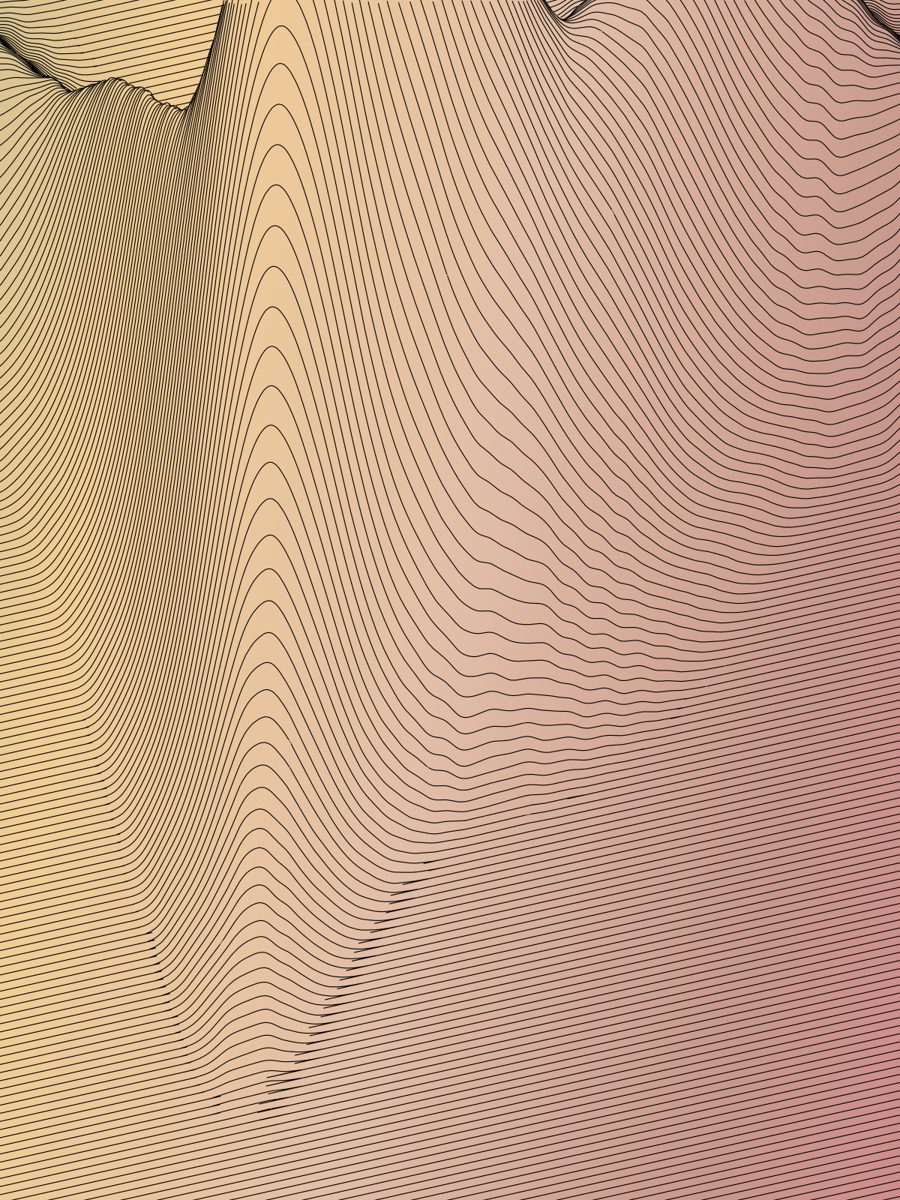
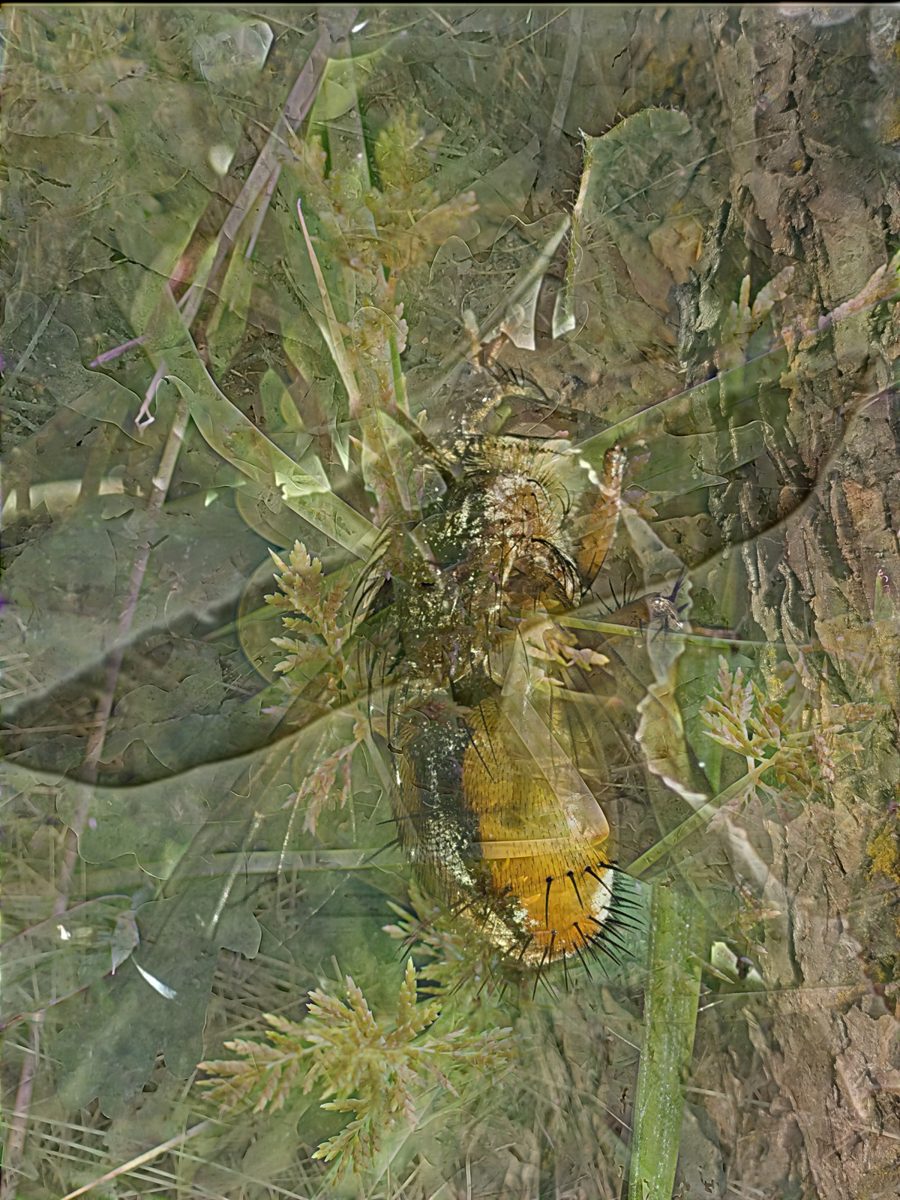
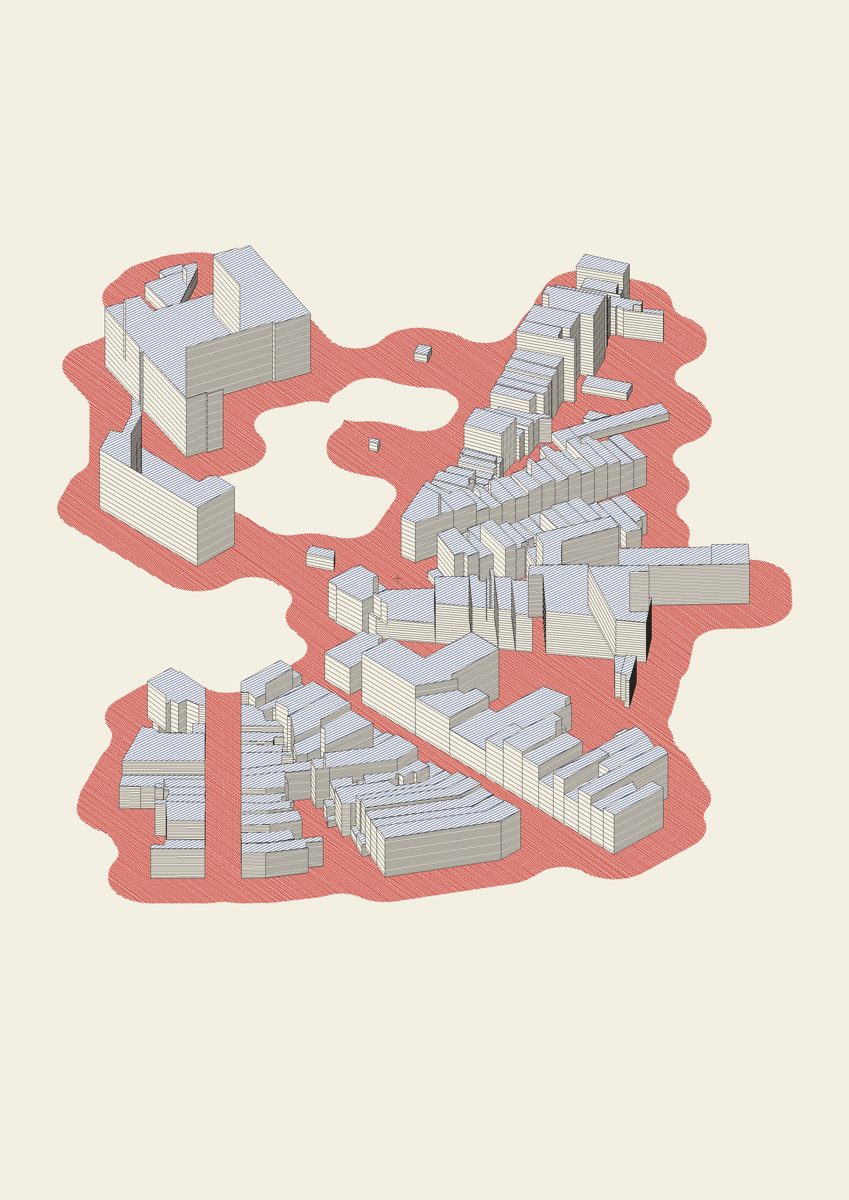
Each of them takes in information from outside, so the resulting work is partly determined by conditions that JAEV does not control. The questions above apply to them as much as to Morellet's squares.
Sources
- Philip Galanter, “What is Generative Art? Complexity Theory as a Context for Art Theory”, 2003
- Anleitung Walzer oder Schleifer mit zwei Würfeln zu componieren, N. Simrock, Bonn. Bibliothèque nationale de France (Wikimedia Commons)
- François Morellet, Répartition aléatoire de 40 000 carrés d’après les chiffres pairs et impairs d’un annuaire de téléphone, 1961. Annely Juda Fine Art, London
- Sol LeWitt, “Paragraphs on Conceptual Art”, Artforum, June 1967
- “Peace or misery: The making of a Sol LeWitt wall drawing”. Walker Art Center, Minneapolis
- “Vera Molnár, aux sources du code”. Centre Pompidou, Paris
- Zarna Hart, “Vera Molnar: Machine Imaginaire – the dance of hands and machine thinking”. Victoria and Albert Museum, London, 2024
- “The Earliest Public Exhibitions of Computer Art”. HistoryofInformation.com
- “Max Bense”. ZKM Center for Art and Media, Karlsruhe
- “Georg Nees”. ZKM Center for Art and Media, Karlsruhe
- Manfred Mohr, “Computer Graphics: Une Esthétique Programmée, Paris 1971”
- “Processing: the Software that Shaped Creative Coding”. AIGA Eye on Design
- “Casey Reas: {Software} Structures”. Whitney Museum of American Art, New York
.jpg)