Openly licensed photographs as material
JAEV Notes · October 2026 · 2 min read
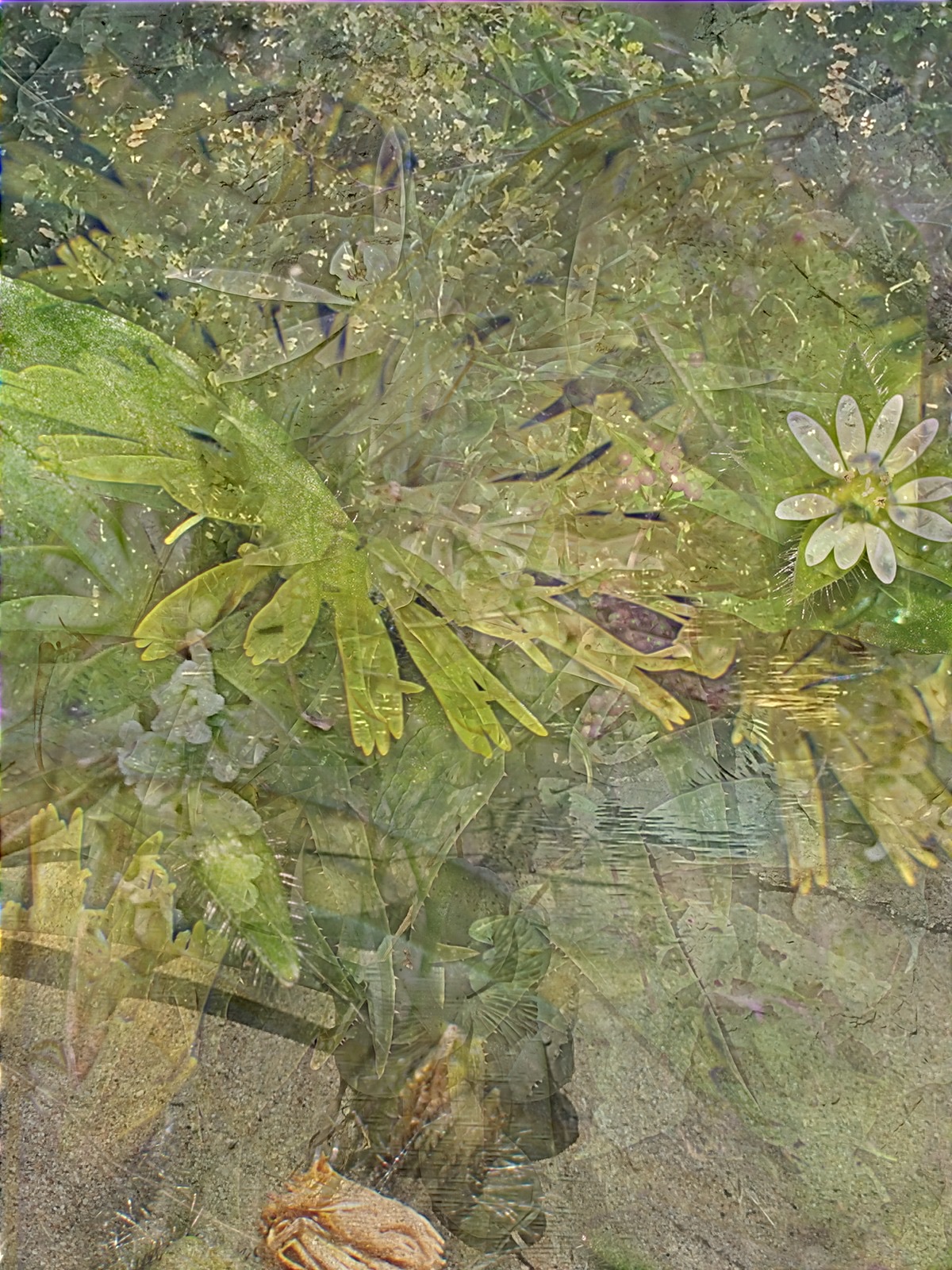
An openly licensed photograph is one whose photographer has said in advance that anyone may use it, under conditions written into a standard licence. Standard licences of this kind come from Creative Commons. The first versions were released on 16 December 2002, and according to the organisation tens of billions of works now carry one.1, 2 Two of its tools leave an artist free to cut, combine and sell: CC BY and CC0.
What the licences allow
CC BY 4.0 (released in November 2013) lets anyone copy and redistribute the material and "remix, transform, and build upon" it, for any purpose, even commercially.1, 3 The condition is attribution: give appropriate credit, provide a link to the licence, and indicate if changes were made.3
CC0 (released in 2009) is a waiver rather than a licence with conditions: the photographer gives up all copyright and related rights as far as the law allows. No attribution is required, though users may give it.1, 4
Where the photographs are
One large collection is Wikimedia Commons, a free media repository to which anyone can contribute, which on 20 October 2026 held 149,797,865 freely usable files.5 Other platforms record a licence for each photograph separately, so a program can ask for only CC0 and CC BY images and leave the rest. Each photograph then carries its licence and its photographer's name as data, which a program can print next to the result as easily as it reads the image.6
Many photographs, one image
Laying many photographs over each other is an old method. In the late nineteenth century Francis Galton exposed several portraits on the same photographic plate to make a composite portrait, and used it to try to define the faces of health, disease, beauty and criminality.7 The method averages: what the pictures share stays, what is particular to each fades.8
The alternative is to keep, at every point of the image, whichever photograph is sharpest there, so nothing is averaged away. Each photographer's subject, the thing they focused on, survives, and the blurred backgrounds give way.8
Where to see it
Olof Broström's Group Photos does this once a day on JAEV's server. Ten photographs are drawn at random from those uploaded that day to a public platform where people share observations of plants, animals and fungi, each by a different photographer and each with a free licence, and combined by sharpness.8 Group Photo 0121, made on 19 October 2026, was drawn from 5,729 photographs posted that day; its page lists the ten sources, each with its share of the image, its photographer and its licence, CC BY or CC0.6
Sources
- “Creative Commons license”. Wikipedia
“Version 1.0 of the licenses was officially released on December 16, 2002.” Version 4.0 released on 25 November 2013. “CC0 began development in 2007 and was released in 2009.” - “About CC”. Creative Commons
“Today, tens of billions of works are CC licensed.” - “Attribution 4.0 International (CC BY 4.0)”, licence deed. Creative Commons
“Share — copy and redistribute the material in any medium or format for any purpose, even commercially.” “Adapt — remix, transform, and build upon the material for any purpose, even commercially.” “Attribution — You must give appropriate credit, provide a link to the license, and indicate if changes were made.” - “CC0”. Creative Commons
CC0 “allows creators and rightsholders to waive all copyright and related rights” in their works; “No attribution required (unless the user chooses to give it).” - Wikimedia Commons, Main Page. Retrieved 20 October 2026
“a collection of 149,797,865 freely usable media files to which anyone can contribute” - “Group Photo 0121”, Olof Broström, 19 October 2026. JAEV, Lund
“Drawn from: 5,729 photographs, posted on 19 October 2026”; sources listed with share of the image, photographer and licence (CC BY or CC0). - “Composite portrait”. Wikipedia
“Galton devised a technique for multiple exposures on the same photographic plate”; he “attempted to define physiognomic characteristics of health, disease, beauty, and criminality.” The article dates the technique to the 1880s. - “Group Photos”, Olof Broström. JAEV, Lund
Ten photographs uploaded that day, each by a different photographer and with a free licence, combined by sharpness; “Averaging erases what is particular and leaves what is common. Group Photos does the opposite”; each work lists its sources, photographers and licences.
- Published
- JAEV Notes, October 2026.
- Use
- Text CC BY 4.0. Free to use and quote with credit to JAEV and a link to this page. Images and quotations by others keep their own terms.
All texts as one file: archive.json - Cite
- JAEV Notes, “Openly licensed photographs as material”, jaev.gallery/notes/commons-images-as-material/, 2026.
- Corrections
- Additions and corrections are welcome: info@jaev.gallery
- Share
A link from your own site, course page or reading list helps others find it.- Follow
- New notes by RSS · Instagram · Bluesky
JAEV is a daemon taking shape: machines, weights, room, brain.