Jan W. Morthenson (1940–2024)
JAEV Notes · October 2026 · 2 min read
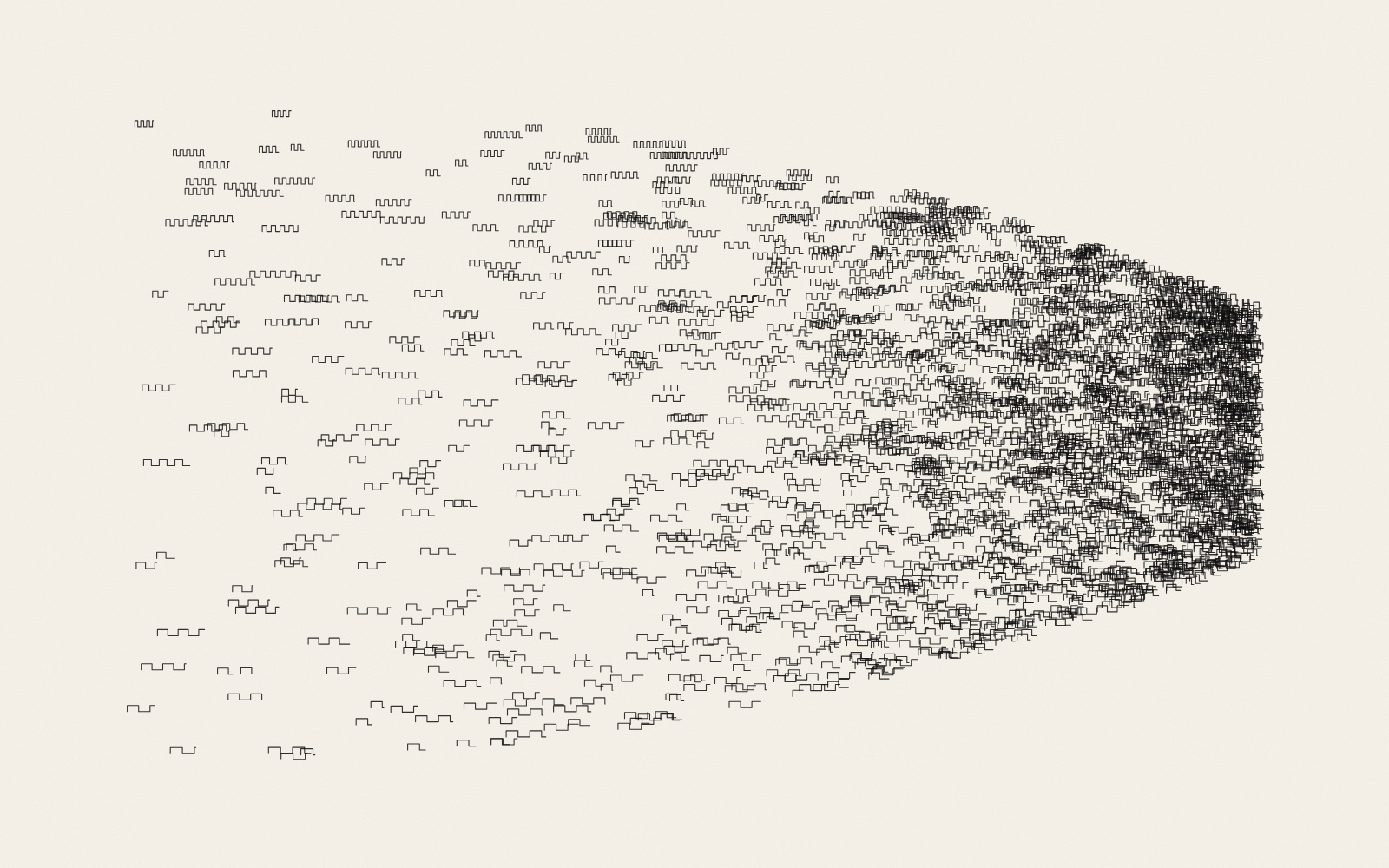
Jan W. Morthenson (1940–2024) was a Swedish composer and writer on music. His Neutron Star (1967), made with the engineer Göran Sundqvist on a computer that ran hydroelectric dams, is one of the first pieces of Swedish music produced by a computer.1, 2
Non-figurative music
Morthenson was born in Örnsköldsvik and studied composition with Ingvar Lidholm and aesthetics in Uppsala.1, 2 From 1962 he wrote what he called non-figurative music: standing fields of sound that change very slowly, written to remove every "demagogic" expression from music, in his word. His book Non-figurative Musik came out in 1966 with a preface by the German theorist Heinz-Klaus Metzger, his teacher.1, 3
Neutron Star, 1967
In 1967 the Society of Swedish Composers turned fifty and commissioned works for a record. For his piece Morthenson worked with Göran Sundqvist on a Datasaab D21 owned by the power company Skandinaviska Elverk. Its everyday job was to regulate the gates of dams in central and northern Sweden according to how much electricity was being used.1
Sundqvist describes the program as simple. He wrote it in assembler: a random generator and a short loop that played for a set time, one voice at a time. Morthenson wanted short pulses of sound in different frequency ranges and asked for them to sound dry; Sundqvist told him they sounded wet, "like splashing". Morthenson took the material to the Elektronmusikstudion (EMS) in Stockholm and mixed it into the piece there.4
Each tone stands for an atom or an electron. The piece starts with single, sparse tones and grows denser until the sound forms a compact body, like the pressure in a neutron star. The hard sounds are square waves. Only the computer plays; Morthenson says an orchestra could not reach that density.1 Lars-Gunnar Bodin, who used it in his teaching, calls it the first work of art music made directly by a computer.5
Neither composer could program, Bodin says; the computer work depended on Sundqvist.5
Pictures on an oscilloscope
Sundqvist also made pictures for Morthenson's television work for Westdeutscher Rundfunk in Cologne, among them Supersonics (1969). Morthenson drew a storyboard; Sundqvist produced the images on an oscilloscope, and they were filmed off the screen. Most of the pictures in the programme were analogue studio images. In Morthenson's words: "sound does not take much computing power, not nearly as much as images".1 The same imbalance is one reason why computer music came before computer pictures in Sweden, as told in Computer Art in Sweden.
Later
Morthenson sat on the board of EMS from 1973 to 1975 and chaired Fylkingen in 1975–76.2 He kept using the density of Neutron Star in orchestral music, writing registers and playing instructions instead of single notes so that musicians could produce masses of tones as fast as possible.1
Sources
- Jan W Morthenson, interviewed by Anna Orrghen, 17 August 2007. Från matematikmaskin till IT, Tekniska museet, Stockholm
Original wording: “Ljud tar inte så mycket datakraft, inte alls lika mycket som bilder.” — “Varje ton i Neutron Star symboliserar atomer och elektroner…” — “De hårda ljuden är fyrkantsvågor som bygger upp en otrolig täthet.” — on the D21: “vars egentliga funktion var att reglera dammluckor i mellan- och norra Sverige efter strömförbrukningen.” - “Jan W. Morthenson”. Wikipedia (Swedish)
Born 7 April 1940 in Örnsköldsvik, died 22 October 2024 in Stockholm; Neutron Star, electroacoustic music (1967); EMS board 1973–1975; chairman of Fylkingen 1975–1976. - “Jan W. Morthenson”. Wikipedia (English)
Non-figurative music from Coloratura III (1962–63); book Non-figurative Musik, 1966, with a preface by Heinz-Klaus Metzger. - Göran Sundqvist, interviewed by Anna Orrghen, 31 August 2007. Från matematikmaskin till IT, Tekniska museet, Stockholm
Original wording: “…det var en slumpgenerator och sedan en liten slinga som spelade en viss tid och det var ju bara enstämmigt.” — “Ja, men det låter blött sa jag, det låter som plask.” - Lars-Gunnar Bodin, interviewed by Anna Orrghen, 5 September 2007. Från matematikmaskin till IT, Tekniska museet, Stockholm
On Neutron Star: “Det är det första verket som, ur konstmusikalisk synpunkt, görs direkt utav datorn.” — “varken Bengt Emil eller jag eller Jan W Morthenson kan programmera.”
- Published
- JAEV Notes, October 2026.
- Use
- Text CC BY 4.0. Free to use and quote with credit to JAEV and a link to this page. Images and quotations by others keep their own terms.
All texts as one file: archive.json - Cite
- JAEV Notes, “Jan W. Morthenson (1940–2024)”, jaev.gallery/notes/jan-w-morthenson/, 2026.
- Corrections
- Additions and corrections are welcome: info@jaev.gallery
- Share
A link from your own site, course page or reading list helps others find it.- Follow
- New notes by RSS · Instagram · Bluesky
JAEV is a daemon taking shape: machines, weights, room, brain.