Is AI art art?
The question was asked about the camera in 1859 and about the computer in 1965. The answers then are the best guide to the answers now.
JAEV Editorial · 25 October 2026 · 13 min read
Stuttgart, 5 February 1965: a mathematician named Georg Nees opened a small exhibition of drawings at the Technische Hochschule, among the first exhibitions of computer art anywhere. A computer had calculated them, a plotter had drawn them. Artists came over from the city's Academy of Fine Arts for the opening, and one of them asked a question that is still being asked almost word for word.
Frieder Nake, who was there, wrote it down: "Tell me, Mr. Nees, can you make your machine draw like an artist's flow?" Nees answered: "Yes, I can. If you can tell me precisely how to define your way of drawing." According to Nake, the professors left the room. "Who does he think we are?"1
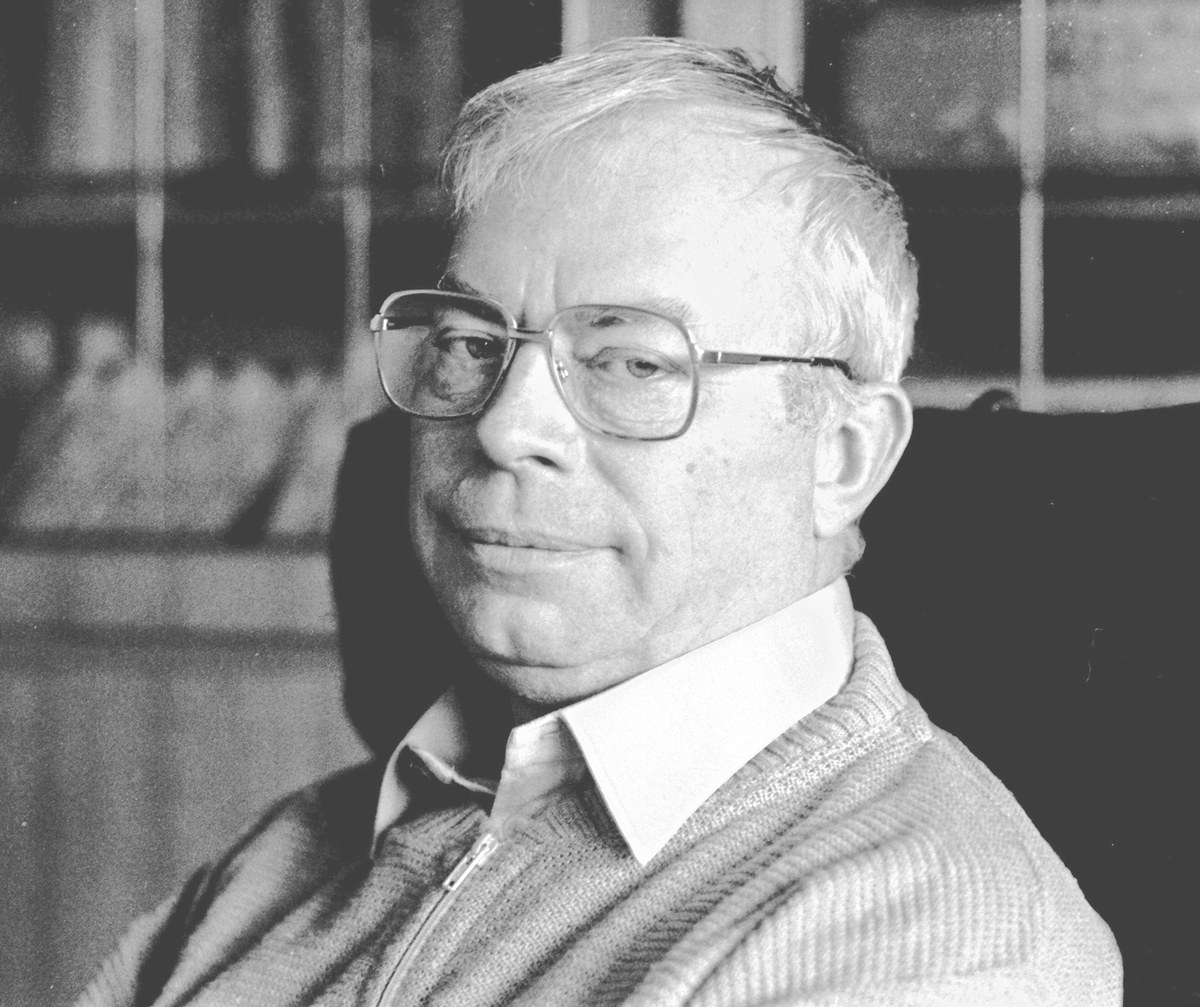

Sixty years later the question is "Is AI art art?", and it is usually treated as new. It has been asked about almost every tool that made making easier, and the answers given then are the best guide to the answers now.
The short answer
Yes, in the only sense that has ever settled the question: art is what people make, show and look at as art, and a tool has never disqualified a work. Who the author is, is a separate question, and the law answers it differently from country to country. Whether a particular AI image is any good is a third question, and the answer is usually no, as it is for most images made with any tool. The rest of this text is about why those three questions keep getting mixed up, and what happened the last times they were asked.
"AI art" also covers very different things. There are images made from a typed prompt in a few seconds. There are artists' own systems, built and trained over years, like Harold Cohen's AARON or xhairymutantx, a model that Holly Herndon and Mat Dryhurst trained on images of Herndon's own public persona for the 2024 Whitney Biennial.2 And there is AI as one tool among others inside work that is otherwise made by hand. The anger is mostly about prompt images; the history below is mostly about systems.
New York, 1965
Two months after Stuttgart, in April 1965, the Howard Wise Gallery in New York showed Computer-Generated Pictures by Bela Julesz and A. Michael Noll, two researchers at Bell Labs. Noll later quoted Stuart Preston's review in The New York Times: "The wave of the future crashes significantly at the Howard Wise Gallery … Freed from the tedium of technique and the mechanics of picture making, the artist will simply 'create.'"3 The irony is easy to hear, and so is the fear under it: that technique was what made someone an artist, and that a machine had just taken it away.
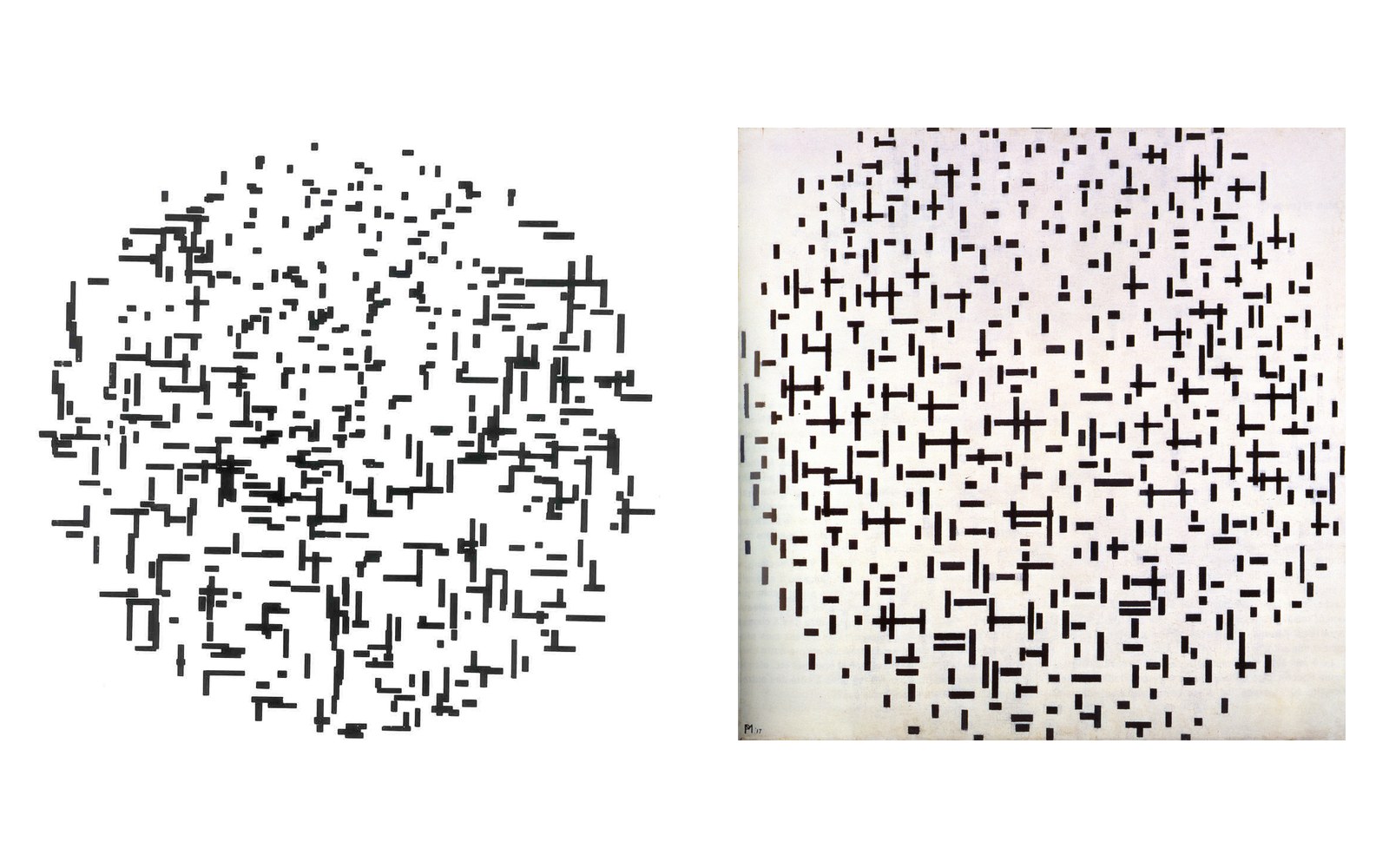
Noll answered with an experiment. He had programmed a computer to make a picture in the manner of Piet Mondrian's Composition with Lines from 1917, short black bars on white, and showed reproductions of both to 100 people, nearly all of them employees at Bell Labs. 59 percent preferred the computer's picture. Only 28 percent could tell which was which.4 The paper, published in 1966, showed that viewers could not reliably tell the machine from the master. It could not show that this made the machine's picture art, and Noll did not claim it did.

Paris, 1859
The argument was already a hundred years old. In his review of the Paris Salon of 1859, Charles Baudelaire wrote that the photographic industry had become "the refuge of every failed painter, too poorly gifted or too lazy to finish his studies". Photography should know its place: its true duty was "to be the servant of the sciences and the arts, but the very humble servant, like printing and shorthand, which have neither created nor taken the place of literature" (both in our translation).5
Replace "photographic industry" with "image generators" and the passage could be posted today. It has the whole complaint in it: that the tool lets people skip the training, that people who skip the training are not real artists, and that the tool must stay a servant.
Walter Benjamin, looking back at that debate in 1935, found it beside the point: "Earlier much futile thought had been devoted to the question of whether photography is an art. The primary question – whether the very invention of photography had not transformed the entire nature of art – was not raised."6 Replace photography with AI, and the sentence describes the debate going on now.
Composing by rule
Behind "is it art?" there is usually a narrower question: did the person do it themselves? Composers have long worked by rules they did not invent. Johann Joseph Fux's Gradus ad Parnassum, a textbook of counterpoint published in Vienna in 1725, taught generations of them, Mozart and Haydn among them according to its English publisher,7 and nobody thinks a composer who follows music theory is less the author of the piece.
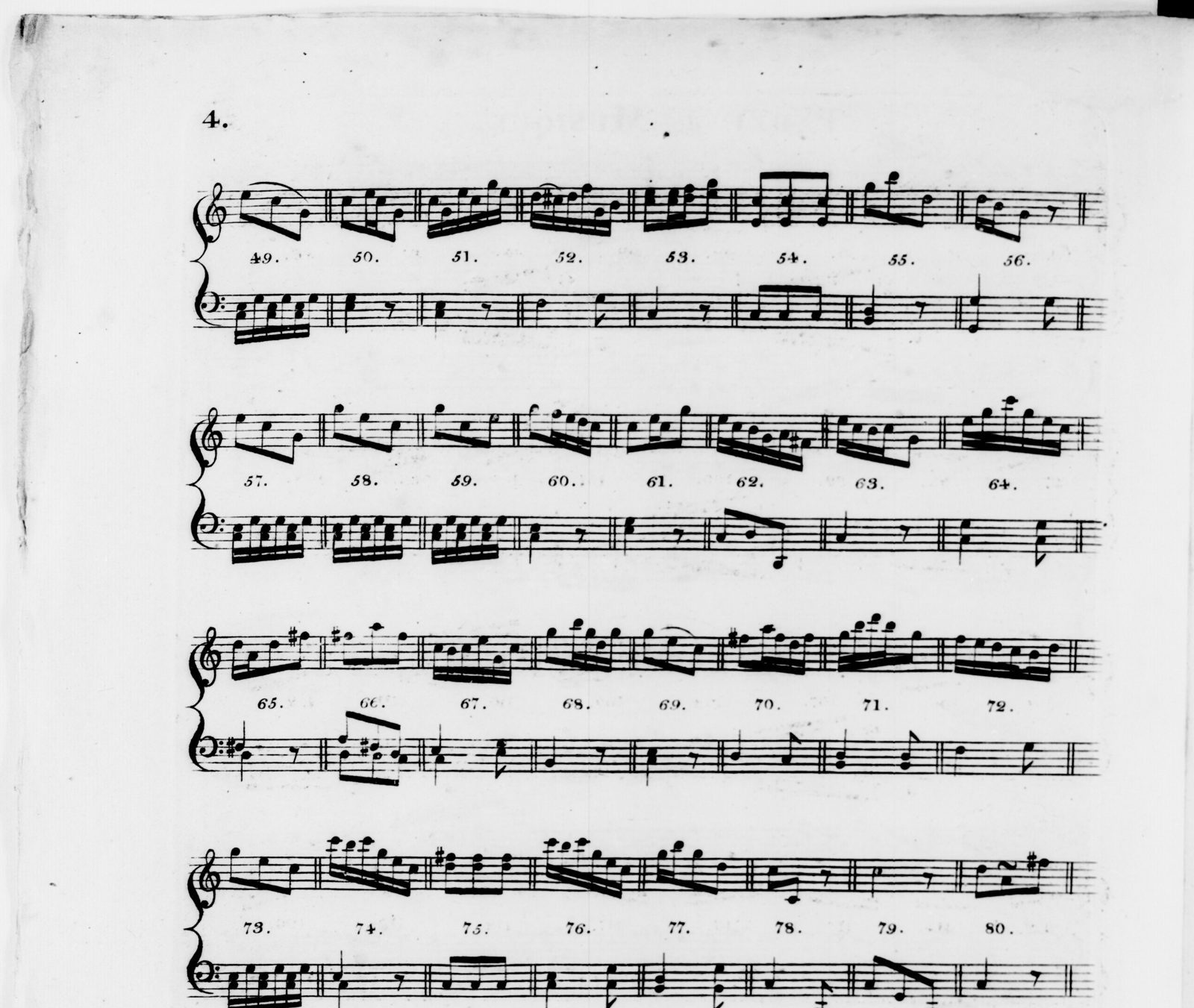
A game for composing dances by throwing dice was once printed and sold under Mozart's name. Mozart's official catalogue lists the printed dice games as "incorrectly assigned",8 but somebody thought the name would sell them, and nobody seems to have thought composing by dice was shameful. In 1957 Lejaren Hiller and Leonard Isaacson at the University of Illinois had the university's computer compose the Illiac Suite for string quartet, which the university calls "the first piece to use a computer for its composition".9 In 1996 Brian Eno said that his ambient music was based on a simple idea: a system or a set of rules "which once set in motion will create music for you". That led him to ask who the author was. "Am I the composer?"10

In visual art the turn came in 1967, when Sol LeWitt wrote that in conceptual art "the idea becomes a machine that makes the art".11 His wall drawings, still made by other people's hands following his written instructions, are still his.
Who holds the pen
In 1924 André Breton defined surrealism as "psychic automatism in its pure state", art "dictated by the thought, in the absence of any control exercised by reason, exempt from any aesthetic or moral concern".12 The surrealists wanted to get the conscious artist out of the way.
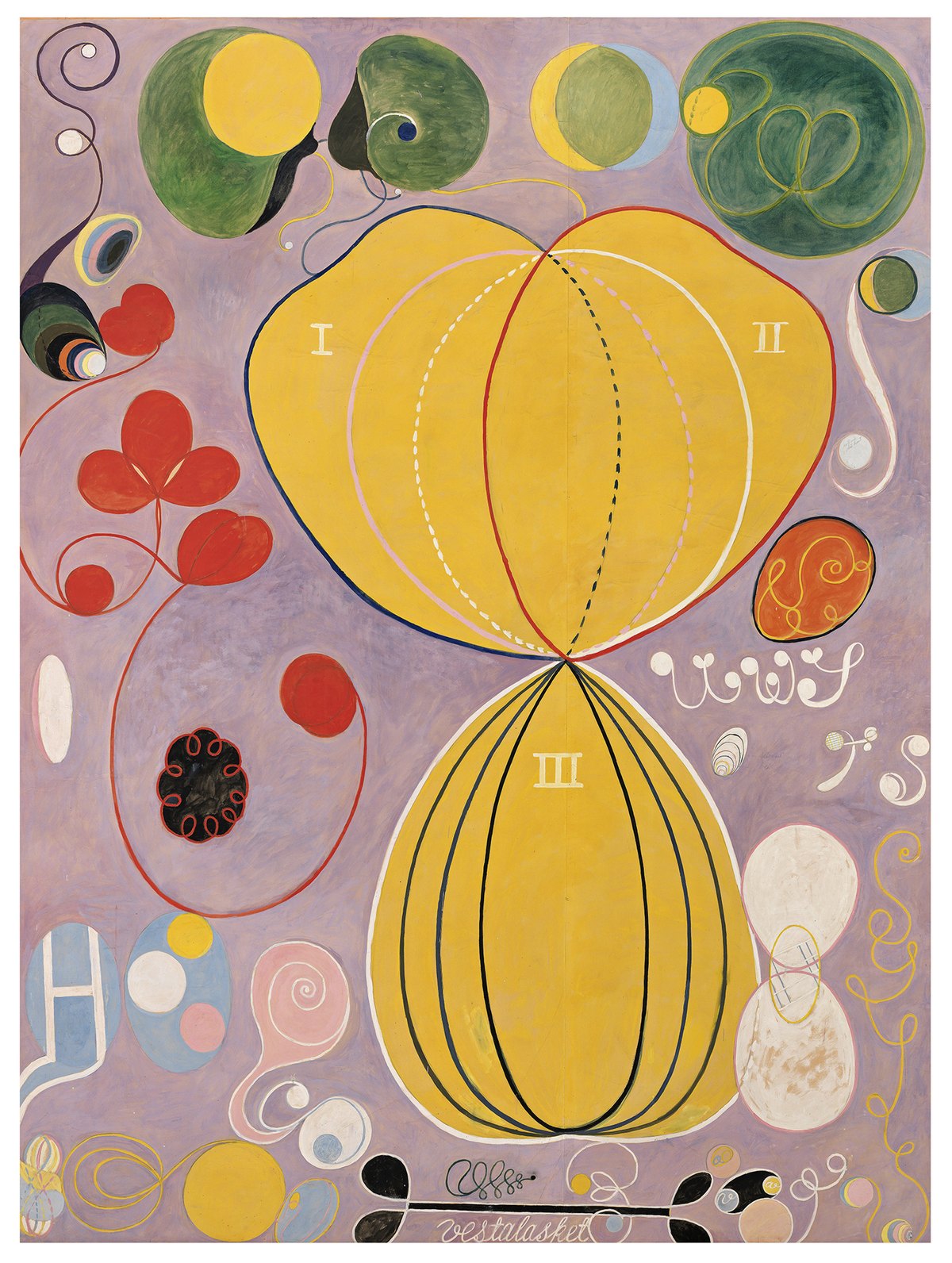
Hilma af Klint had gone further, eighteen years earlier. In January 1906, according to the foundation that holds her work, the spiritual being Amaliel, one of the "intermediaries of The High Masters", offered her a commission, and she accepted it at once. By 1915 The Paintings for the Temple numbered 193 works.13 She explained, in the translation quoted by The New York Review of Books, that the first of them were made "directly through me, without any preliminary drawings and with great force", and: "I had no idea what the paintings were supposed to depict."14 By her own account she was the instrument.

Harold Cohen worked on the same question from the other side for the rest of his career. He conceived his program in the late 1960s and named it AARON in the early 1970s,15 and it went on drawing and painting for the rest of his life. He never claimed AARON was an artist, and he did not accept that the question had a simple answer either: "If what AARON is making is not art, what is it exactly, and in what ways, other than its origin, does it differ from the 'real thing?'"16
How much the human matters to a work depends on what one thinks a human is. If the artist is a sovereign author, any tool that does part of the work is a threat. If, on the other hand, the artist is a channel – for a god, for the unconscious, for nature, for the accumulated rules of a culture – the tool becomes one more channel among them, and what counts is what comes through.
Now
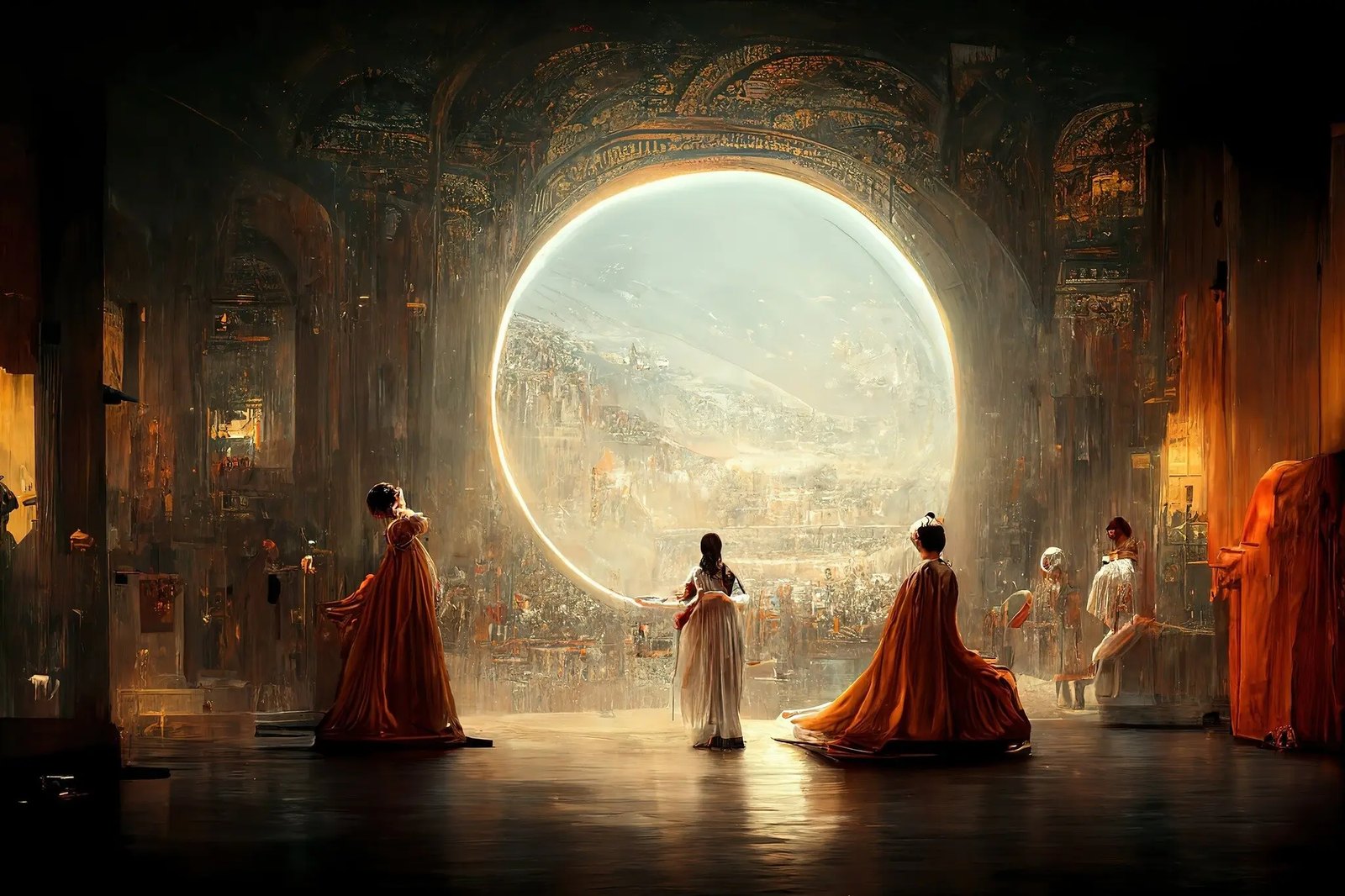
In September 2022 Jason M. Allen won the blue ribbon for emerging digital artists at the Colorado State Fair with Théâtre D'opéra Spatial, an image he had made with Midjourney. The New York Times quoted one reaction: "We're watching the death of artistry unfold right before our eyes." Allen's reply: "Art is dead, dude. It's over. A.I. won. Humans lost."17 The U.S. Copyright Office refused to register the image the next year. Allen said he had refined his prompts "at least 624 times"; the Office found that the image contained "more than a de minimis amount of content generated by artificial intelligence" and that this part could not be his.18

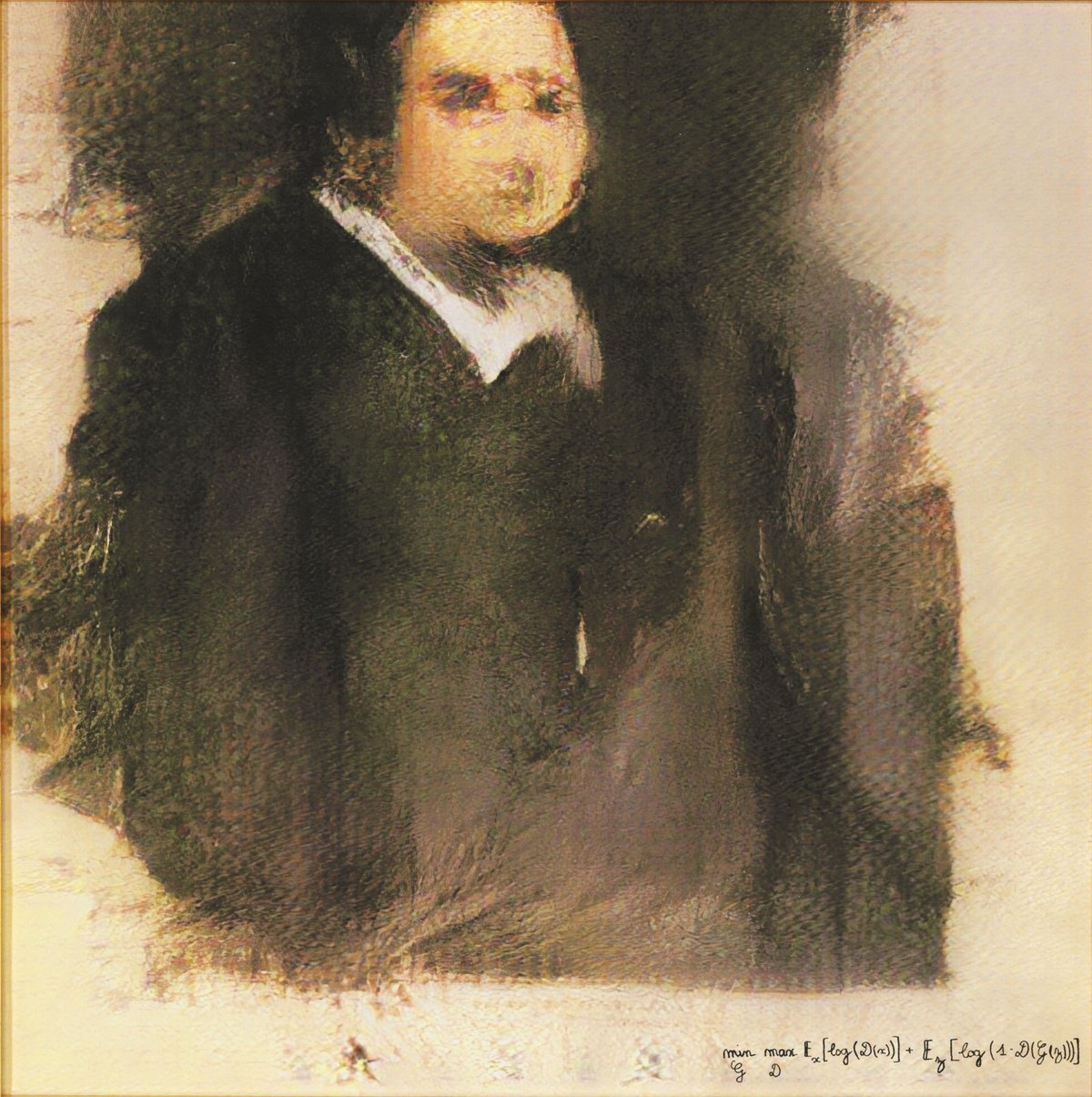
The market did not wait for the law. Christie's sold Portrait of Edmond de Belamy, a blurred portrait printed from a generative network, for $432,500 in 2018, against an estimate of $7,000–10,000.19 In February 2025 more than 6,000 people signed an open letter asking Christie's to cancel Augmented Intelligence, which the auction house presented as its first sale devoted entirely to AI art; the letter tied it to the "mass theft of human artists' work".20 The sale went ahead and made $728,784.21

Public opinion is less settled than the debate suggests. YouGov asked 2,000 Americans in March 2023, and only 27 percent had seen AI art; 56 percent of those said they enjoyed it. Asked who deserved the credit for an AI image, 9 percent named the person who wrote the prompt.22
Can AI art be copyrighted?
In the United States, not on its own. In January 2025 the Copyright Office concluded that "prompts alone do not provide sufficient human control to make users of an AI system the authors of the output".23 In Thaler v. Perlmutter a federal appeals court held in March 2025 that the Copyright Act "requires all eligible work to be authored in the first instance by a human being", while noting that the rule "does not prohibit copyrighting work that was made by or with the assistance of artificial intelligence".24 The Supreme Court declined to hear the case in March 2026,25 and Allen sued the Copyright Office over his own refusal in 2024.26 British law, in the Copyright, Designs and Patents Act of 1988, makes the author of a "computer-generated" work "the person by whom the arrangements necessary for the creation of the work are undertaken".27 Neither law tries to say whether AI art is art. Both look for a person behind the work.
The strongest argument against
The best case against AI art, made by the writer Ted Chiang in The New Yorker in 2024, starts from choices: "art is something that results from making a lot of choices." A prompt holds very few: "if you supply a hundred-word prompt, you have made on the order of a hundred choices."28
He is right about a single prompt. He also anticipated the photography comparison: "When photography was first developed, I suspect it didn't seem like an artistic medium because it wasn't apparent that there were a lot of choices to be made; you just set up the camera and start the exposure."28 Photography became an art when people saw where its decisions were made: in what to point at, when, and which of a hundred negatives to keep.
With AI they are moving out of the hand and into iteration, selection and design. Allen ran his prompts more than six hundred times. Chiang himself mentions the filmmaker Bennett Miller, who generated more than a hundred thousand images with DALL-E 2 to arrive at the twenty he exhibited at Gagosian.28 Cohen made decades of choices, but he made them in code, before AARON drew anything. Where much has been decided, Chiang's own test is met. Where little has, the result is usually as poor as he says.
His second argument is that art, like language, requires "an intention to communicate", which a machine does not have.28 Neither did af Klint's High Masters, Breton's automatism or Nees's random numbers, as far as anyone can show. In each case the intention belonged to the person who chose to set the process going and to show what came out.
What actually hurts
Two things are being argued about at once.
One is consent and payment. The large models were trained on a large part of what has been published, much of it by living artists who were never asked. The open letter to Christie's was about that, and it is a fair complaint. Even the software companies acknowledge the problem: Anthropic's instructions for its model Claude on making algorithmic art tell it to "create original algorithmic art rather than copying existing artists' work to avoid copyright violations".29 Learning from everything is how culture has always worked. That does not cancel the claim of living artists to be asked and paid when their work becomes material for a product.
The other is skill. For most of history, if a picture looked good, that was proof of years of training. Now it takes anyone a minute to make one, and people who know a craft can see that the newcomers have no idea why their picture works: which colours carry it, why the composition holds. They are right. The same could have been said of most people with a camera when photography became a hobby.
Calculators went through the same argument. In the 1970s American schools debated whether pocket calculators would destroy arithmetic; in 1977 the president of the National Council of Teachers of Mathematics said, "You need the basics to make the calculator do what you want it to."30 In 1980 the council recommended calculators at all grade levels, while insisting that the early grades build number skills without them.31 The basics still mattered, to fewer people, and those who had them could do more with the machine than those who did not.
Our position
We think the models are the calculators, the brushes, the cameras and the 3D printers of this time. For most of history, standing on the shoulders of those who came before took training in the right studio or school, and only a few got that training. Now anyone can stand on the shoulders of a very large part of that history.
We see no problem in ideas finally getting made. Most never leave the head they started in, because whoever had them lacked the hand, the training or the means. That has changed; the change is larger than any argument about whether the result deserves the word art.
It also means that millions of mediocre images and songs now compete with each other and with everything else. That is a real cost. It has been paid before: most photographs taken since 1859 are of no interest to anyone, and photography still produced August Sander and Diane Arbus. Real ideas leak through the noise, though not always on time: af Klint asked that her work not be shown until twenty years after her death.14
The fear among artists is understandable. But AI art has so far mostly stayed in the box, as images and sounds on a screen, and the real change will come when it leaves the screen: when brains, machines and hands together make new objects in the world, things that could not be made before and that are presented as new rather than as imitations of the old. If artists should fear anything, it is that moment. It is also where we expect the serious work to be made. That is why JAEV exists.
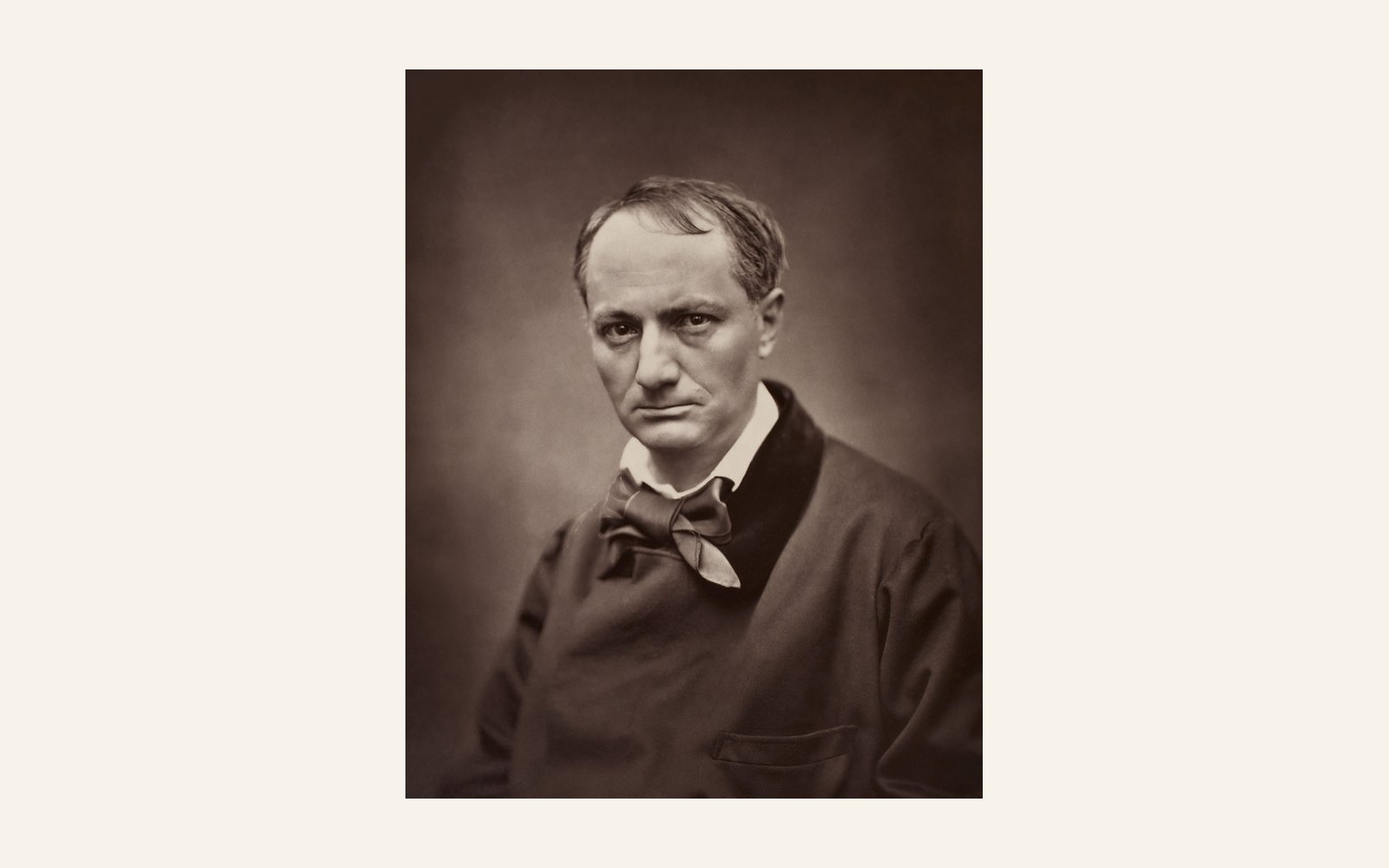
Nake, whose report from Stuttgart opens this text, wrote in 1971 that questions like "is a computer creative" or "is a computer an artist" or the like "should not be considered serious questions, period".32 We agree. The question that matters is Benjamin's: what the tool does to art as a whole. Whether a given work made with it is art will be settled as it was for photography, by the works that are still being looked at in fifty years.
Sources
- Frieder Nake, “The Semiotic Engine: Notes on the History of Algorithmic Images in Europe”. Art Journal 68:1, Spring 2009, pp. 76–89
- “Holly Herndon and Mat Dryhurst: xhairymutantx”. Whitney Museum of American Art, Whitney Biennial 2024
- A. Michael Noll, “First-Hand: Howard Wise Gallery Show of Digital Art and Patterns (1965)”. Engineering and Technology History Wiki
- A. Michael Noll, “Human or Machine: A Subjective Comparison of Piet Mondrian's ‘Composition with Lines’ (1917) and a Computer-Generated Picture”. The Psychological Record 16, 1966, pp. 1–10
- Charles Baudelaire, “Salon de 1859”, part II, “Le public moderne et la photographie”. In Curiosités esthétiques, 1868. Wikisource
- Walter Benjamin, “The Work of Art in the Age of Mechanical Reproduction”, 1935, section VII. Translated by Harry Zohn
- Johann Joseph Fux, The Study of Counterpoint, from Gradus ad Parnassum. Translated and edited by Alfred Mann. W. W. Norton
- “Musikalische Würfelspiele”, KV Anh. C 30.01. Köchel Catalogue Online, Mozarteum Foundation Salzburg
- “Illiac Suite”. Distributed Museum, University of Illinois Urbana-Champaign
- Brian Eno, “Generative Music”, talk in San Francisco, 8 June 1996. In Motion Magazine
- Sol LeWitt, “Paragraphs on Conceptual Art”. Artforum 5:10, June 1967, pp. 79–83
- André Breton, Manifesto of Surrealism, 1924. Translated by Richard Seaver and Helen R. Lane, 1969
- “About Hilma af Klint”. The Hilma af Klint Foundation
- Susan Tallman, “Painting the Beyond”. The New York Review of Books, 4 April 2019
- “Harold Cohen: AARON”. Whitney Museum of American Art, 3 February – 19 May 2024
- Harold Cohen, “The Further Exploits of AARON, Painter”. Stanford Humanities Review 4:2, 1995 (Internet Archive copy)
- Kevin Roose, “An A.I.-Generated Picture Won an Art Prize. Artists Aren't Happy”. The New York Times, 2 September 2022
- U.S. Copyright Office Review Board, decision on Théâtre D'opéra Spatial, 5 September 2023
- Obvious, Portrait of Edmond de Belamy, 2018. Christie's New York, Prints & Multiples, 25 October 2018, lot 363
- “Thousands of Artists Sign Open Letter Protesting Christie's Upcoming All-A.I. Art Auction”. Smithsonian Magazine, February 2025
- “Christie's AI Art Sale Results”. Artnet News, March 2025
- Christien Pheby, “Half of Americans think AI art will be used to spread false information”. YouGov, 30 May 2023 (survey of 2,000 US adults, 24–25 March 2023)
- U.S. Copyright Office, Copyright and Artificial Intelligence, Part 2: Copyrightability, January 2025
- Thaler v. Perlmutter, No. 23-5233, U.S. Court of Appeals for the D.C. Circuit, 18 March 2025
- Thaler v. Perlmutter, No. 25-449, Supreme Court of the United States, docket (certiorari denied 2 March 2026)
- Allen v. Perlmutter, No. 1:24-cv-02665, U.S. District Court for the District of Colorado, complaint filed 26 September 2024
- Copyright, Designs and Patents Act 1988, section 9(3). legislation.gov.uk
- Ted Chiang, “Why A.I. Isn't Going to Make Art”. The New Yorker, 31 August 2024
- “algorithmic-art”, SKILL.md. Anthropic, anthropics/skills on GitHub
- Bronwen Everill, “Solve for AI”. History News Network, 30 April 2025
- National Council of Teachers of Mathematics, An Agenda for Action: Recommendations for School Mathematics of the 1980s, April 1980
- Frieder Nake, “There Should Be No Computer Art”. PAGE, Bulletin of the Computer Arts Society, no. 18, October 1971. Scan via compart, University of Bremen
- Published
- JAEV Editorial, 25 October 2026.
- Use
- Text CC BY 4.0. Free to use and quote with credit to JAEV and a link to this page. Images and quotations by others keep their own terms.
All texts as one file: archive.json - Cite
- JAEV Editorial, “Is AI art art?”, jaev.gallery/editorial/is-ai-art-art/, 2026.
- Corrections
- Additions and corrections are welcome: info@jaev.gallery
- Share
A link from your own site, course page or reading list helps others find it.- Follow
- New texts by RSS · Instagram · Bluesky
JAEV is a daemon taking shape: machines, weights, room, brain.