Vera Molnár
Before and after the computer
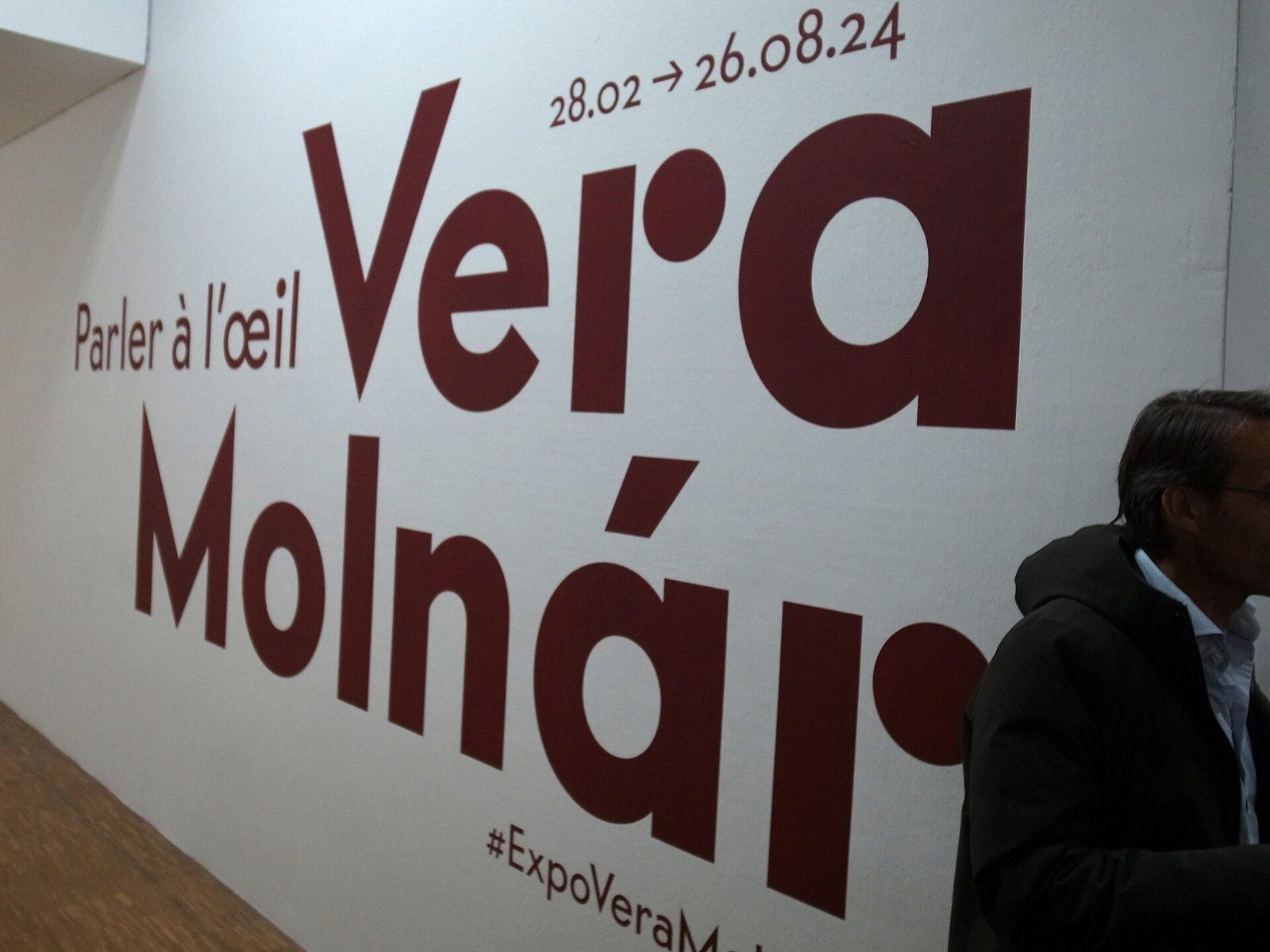
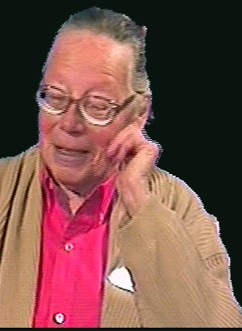
Vera Molnár (1924–2023) is often described as a pioneer of computer art. That is true, but it leaves out the most interesting part of her story. For about ten years before she ever used a computer, she was already making work by following rules she had written herself and letting chance decide what the rules left open. When the computer arrived, she did not have to learn a new way of thinking. She had the method before she had the machine.
.png)
Variation before the computer
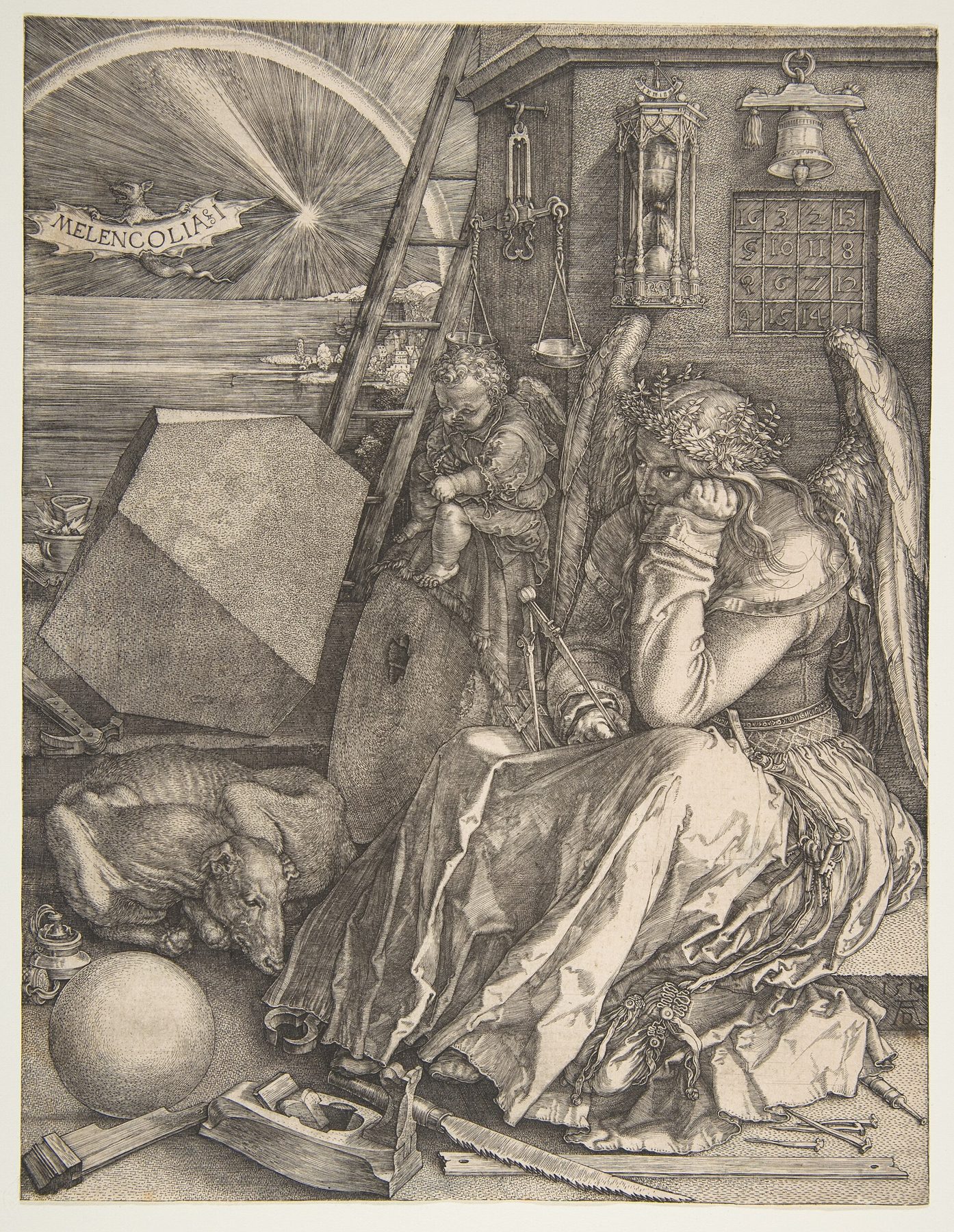
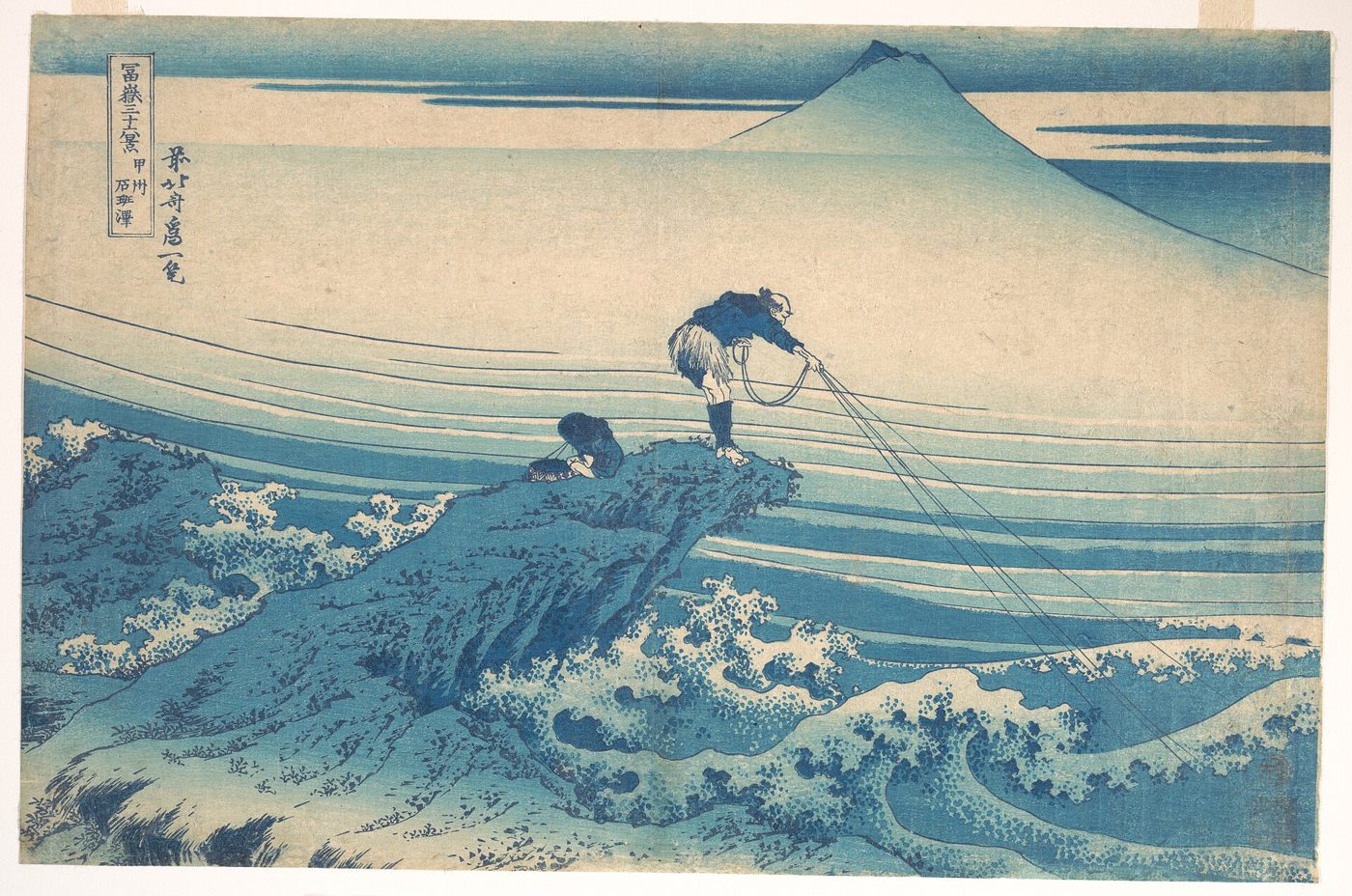
She was born Vera Gács in Budapest. As a teenager, she found two books in an antiques shop that stayed with her: one with Albrecht Dürer's engraving Melencolia I, and one on the Japanese artist Hokusai, which she bought, as she later said, because it contained so many variants of Mount Fuji.1 The same motif, drawn again and again with small changes, would become the subject of her own work.


_-_Google_Art_Project.jpg)
,_from_the_series_Thirty-six_Views_of_Mount_Fuji_(Fugaku_sanj%C5%ABrokkei)_MET_DP140973.jpg)
She entered the School of Fine Arts in Budapest in 1942 and wrote her final thesis on Cézanne and Cubism. In 1947 she and her fellow student François Molnár, whom she married the following year, left Hungary, and after a few months in Rome they settled in Paris.1
Paris and concrete art
In Paris she turned to geometric abstraction and concrete art: painting made of simple shapes, planned in advance and without reference to anything outside the picture. Her titles simply describe what is there, such as 3 carrés noirs, 3 rectangles gris, 5 rectangles bleu (3 black squares, 3 grey rectangles, 5 blue rectangles) from 1950.2 In 1957 she travelled to Zurich with François Morellet to meet the Swiss artist Max Bill. In 1960 she and François Molnár were among the founders of the Centre de recherche d'art visuel in Paris, together with Morellet, Julio Le Parc and others. They soon left it; the group continued as GRAV, the Groupe de recherche d'art visuel.1
The imaginary machine
From 1959 she worked with what she called a machine imaginaire, an imaginary machine. It was a simple program, carried out by hand: a set of instructions and prohibitions that transformed a shape step by step. She chose the shapes, colours and materials, followed the rules, and drew the results she wanted to keep on a roll of paper.1 The Victoria and Albert Museum describes how she often worked on a grid, with rules for colour, shape, line and direction, which let her work systematically through the possible permutations of a series.3
One of the earliest works made this way is Quatre éléments distribués au hasard (Four elements distributed at random) from 1959: a square of geometric shapes made with strips of black adhesive film glued to white board.1, 2 The title states the method. The rule fixes the elements; chance decides where they go.
This is the important point. The imaginary machine already contained the basic logic of a computer program: a defined set of parts, rules for changing them, a source of randomness and a series of results. What it lacked was speed.
1968: the real machine
In 1967 she co-founded the group Art et Informatique (Art and Computing). In 1968, while student protests filled the streets of Paris, she gained access, in complete secrecy, to a computing centre in Orsay.1 She later described what it meant: "You cannot imagine the emotion of seeing appear on the screen, for the first time, what exists naturally in your brain. Then you only have to press a few keys to make a correction, or to move a shape to the right or to the left."1
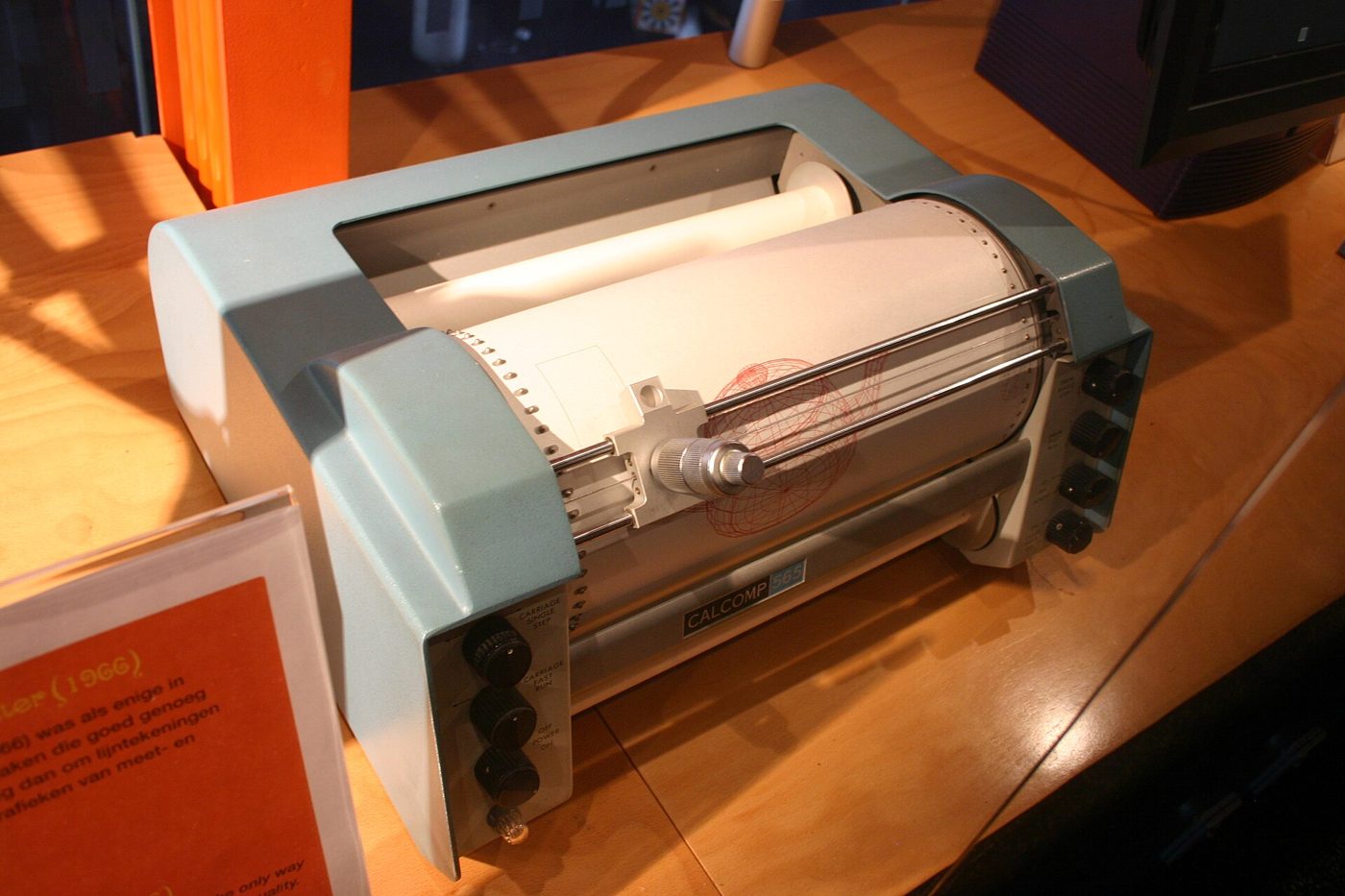

The computer did not change what she was looking for. It changed how quickly she could look. Instead of working through variations by hand, she could produce many, compare them, and keep the ones that met her criteria. The Centre Pompidou puts it plainly: the computer was not an object of technical fascination for her, but a tool for exploring possible combinations and selecting the forms that met her own visual standards.1 Plotter drawings from this period, such as Interruptions (1969), are now in museum collections, including the V&A in London.3
Order and one per cent disorder
The central idea in Molnár's work is not randomness for its own sake. It is the relation between a strict order and a small, deliberate amount of disorder.
In 1974 she and François Molnár wrote a program they called Molnart. It composed images from sets of squares whose sides she could alter, and it let her add a chosen percentage of irregularity, a kind of planned clumsiness, so that the drawing would not look mechanical.1 The idea became one of her trademarks under the name 1 % de désordre, one per cent disorder: a regular system, disturbed by a deliberately controlled amount of irregularity.1 The V&A holds plotter drawings from the same year, (Des)Ordres and Structure of Squares.3
This shows what the computer was for in her work. It did not replace her judgement. It let her set the amount of disorder precisely, run the system many times, and see the whole range of results. The artist decided the rules, the amount of chance, and which results counted as works. The art historian Zsofi Valyi-Nagy, quoted by the V&A, notes that her lines are "unmistakably hers" whether they were drawn by hand or by a plotter.3
Hand and machine
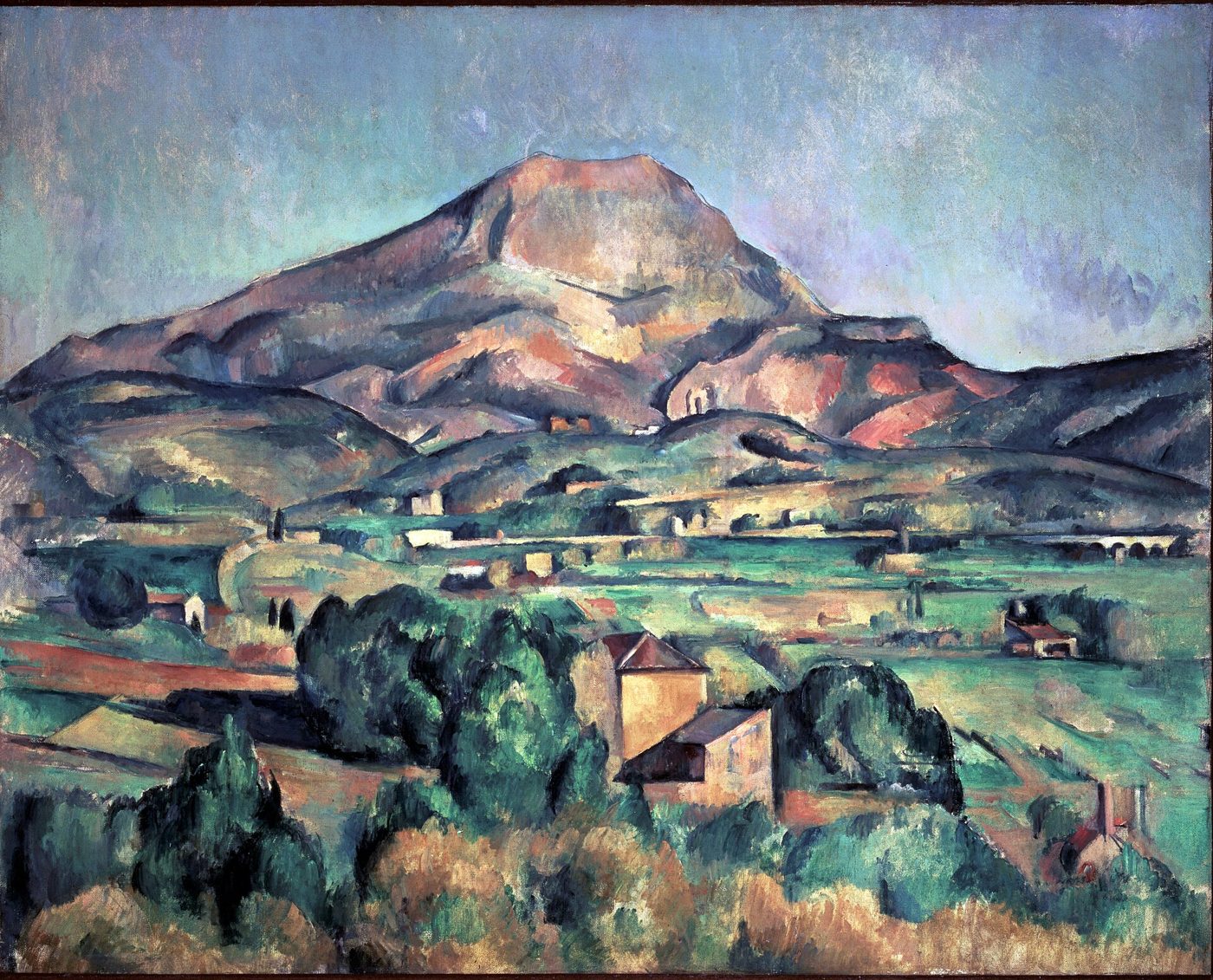
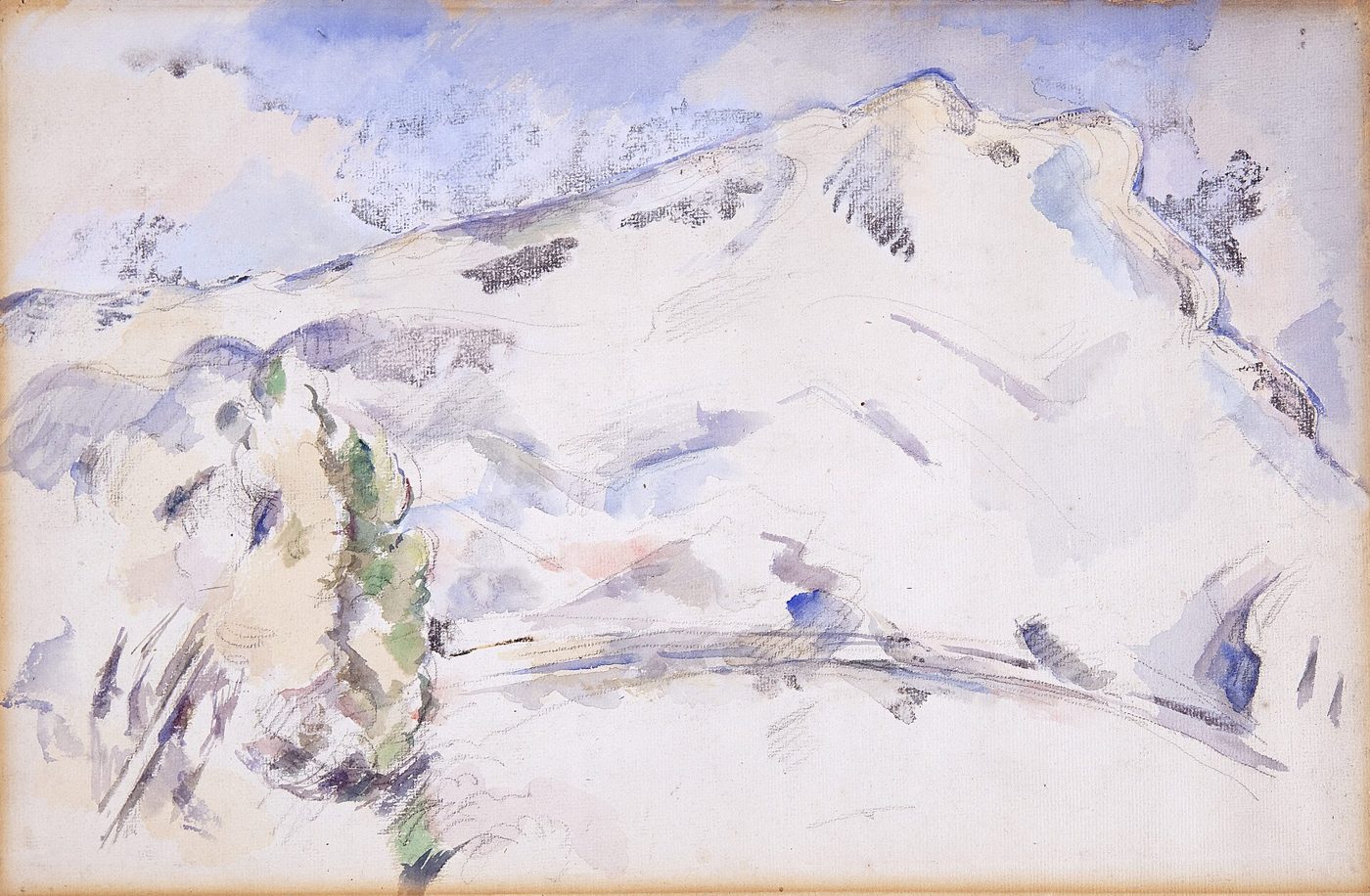
Molnár never stopped drawing by hand. She kept diaries from 1976 onwards, which she later gave to the Centre Pompidou, and she worked by a rule she had set herself long before: pas une journée sans une ligne, not a day without a line.1 She also returned to the images she had loved since her student years. In a series on the Montagne Sainte-Victoire, the mountain Cézanne painted many times, she tore paper as well as drawing lines.1
_-_BF13_-_Barnes_Foundation.jpg)
_-_BF654_-_Barnes_Foundation.jpg)
Recognition came late. According to the Centre Pompidou, she began to sell her work only after François Molnár's death in 1993, and in 2022 she released her first work as an NFT, titled 2 % de désordre.1 She died in Paris on 7 December 2023, aged 99.1, 2 A few months later, the Centre Pompidou opened a large exhibition of her work, Parler à l'œil (Speaking to the eye).1
Why it matters
Molnár's work is the clearest case for the view taken in JAEV's text on generative art: that the system is part of the artistic material. Her imaginary machine was a system before there was a machine to run it. When the real machine came, it took over the execution, and the idea, the rules and the one per cent of disorder remained hers.
Sources
- Stéphanie Pioda, “Vera Molnár, aux sources du code”. Centre Pompidou, Paris, 2023
Quotations from this article are translated from French by JAEV. - “Vera Molnár”. AWARE: Archives of Women Artists, Research and Exhibitions
- Zarna Hart, “Vera Molnar: Machine Imaginaire – the dance of hands and machine thinking”. Victoria and Albert Museum, London, 2024