Astrid Sampe, Sten Kallin and the computer textile
JAEV Notes · October 2026 · 3 min read
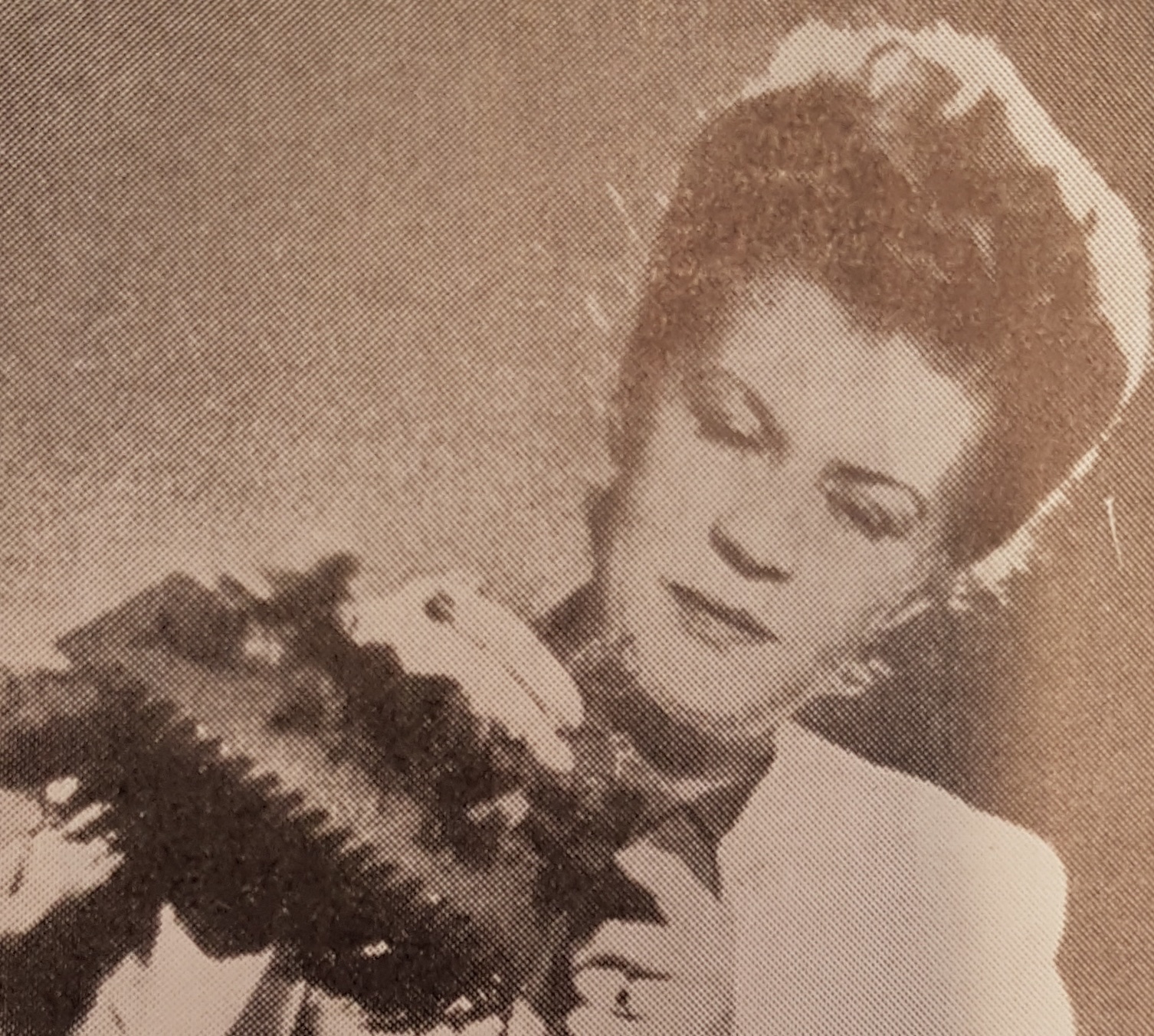
From the late 1960s to the mid-1970s the Swedish textile designer Astrid Sampe (1909–2002) made printed fabrics from drawings by a computer. Sten Kallin, an engineer at IBM in Sweden, wrote the programs, and a pen plotter attached to an IBM 1130 made the drawings.1, 2 They are among the first computer-made textile patterns in Sweden.1
The call
Sampe had been head of the Textilkammare, the textile studio of the Stockholm department store Nordiska Kompaniet (NK), from 1937.1, 2 In Kallin's account, she rang IBM and asked for its design department. There was none, so the switchboard passed her to Kallin, who taught programming and was known for odd ideas: "can you talk to this lady, she wants to draw something strange on computers".2
The machine
Kallin's IBM 1130 stood in a small room at IBM's training department in Solna, driving printers by day; evenings and weekends it was his. With it came a drum plotter no one else wanted: the paper is wrapped round a drum that turns back and forth while the pen moves sideways, in steps of, as Kallin remembers it, about a millimetre. The pen could move in only eight directions: one step sideways, one step of the drum, or both at once.2
The cross
Sampe had been asked for a picture for a Red Cross charity auction and wanted to draw the red cross with a computer. Kallin wrote a program that drew the cross again and again, each time smaller and turned. A menu let her set how many crosses, how many degrees each one turned and how many per cent it shrank. They sat at the machine one evening as she tried values.2
The pen sat a little loose, so a slanting line, made of small steps, came out uneven: "It is somehow a little human, or it has a little character or a little chance in the line." Where many such lines lay close together at slightly different angles, they made moiré.2
From plotter to fabric
A few months later a parcel came to Kallin's home: ten metres of curtain fabric with "this computer rose" on it, enlarged and printed red on white glass-fibre cloth, with a shorter piece in brown on coarse linen, from Almedahls.2 Nationalmuseum holds a curtain fabric by Sampe called Dataros (computer rose), glass fibre printed in brown, made in 1967 at Ljungbergs Textiltryck.3 The name and the cloth match Kallin's account; the colour and the maker do not.
Sampe came back twice. For a commission to design the binder of the Swedish postcode directory, Kallin used almost the same program to draw a post horn. The second time he offered his experiments with curves: "really just a heavily disturbed sine curve that is repeated", mirrored around a centre line, with proportions shrinking towards the edges so that the pattern looks three-dimensional.2
The Art Institute of Chicago holds Computer Colonne, dated 1975, a screen-printed cotton given by Sampe in 1986. Its record credits "Astrid Sampe with computer programmer Sten Kallin and IBM Plotter 1627"; the example is a reproduction from 1985.4 In a printed picture Kallin showed in the interview, a design is captioned "Computer Column, one of Astrid Sampe's and IBM's computer patterns", without his name. He was not paid, except with lengths of fabric.2
The sources date the work differently: 1967 for Dataros, "around 1970" in Sampe's biography, 1975 for Computer Colonne.1, 3, 4 Kallin also wrote programs of the same kind for Sture Johannesson. The wider story is in Computer Art in Sweden.
Sources
- Marika Bogren, “Anna Astrid Sampe”. Svenskt kvinnobiografiskt lexikon, 2021 (translated by Alexia Grosjean)
Born 27 May 1909 in Nacka, died 1 January 2002 in Stockholm; head of NK's Textilkammare from 1937; “Around 1970, in collaboration with IBM and the programmer Sten Kallin, computers were used … to generate the first textile patterns.” - Sten Kallin, interviewed by Anna Orrghen, 10 September 2007. Från matematikmaskin till IT, Tekniska museet, Stockholm
In Swedish; quotations translated by JAEV. Original wording: “…kan du prata med den här tanten, hon vill rita något konstigt på datorer och vi vet inte alls vem vi skall snacka med.” — “Det är liksom lite mänskligt, eller, det är lite karaktär eller lite slump i strecket.” — “…det var tio meter gardintyg med den här datarosen …” — “…egentligen bara en kraftigt störd sinuskurva som upprepas.” — “Computer Column ett av Astrid Sampes och IBM:s datamönster.” - Gardintyg “Dataros” (NMK 57/1981). Nationalmuseum, Stockholm
Composed by Astrid Sampe, made at Ljungbergs Textiltryck AB, 1967; glass-fibre fabric printed in brown; 387 × 126 cm. - Astrid Sampe with computer programmer Sten Kallin and IBM Plotter 1627, Computer Colonne, 1975 (reproduced 1985). The Art Institute of Chicago, 1986.392, gift of Astrid Sampe
Cotton, plain weave, screen printed, 121.2 × 134.1 cm. Originally marketed by Nordiska Kompaniet; re-introduced by Kinnasand AB; produced by Ljungbergs Textiltryck, Floda.
- Published
- JAEV Notes, October 2026.
- Use
- Text CC BY 4.0. Free to use and quote with credit to JAEV and a link to this page. Images and quotations by others keep their own terms.
All texts as one file: archive.json - Cite
- JAEV Notes, “Astrid Sampe, Sten Kallin and the computer textile”, jaev.gallery/notes/astrid-sampe-computer-textile/, 2026.
- Corrections
- Additions and corrections are welcome: info@jaev.gallery
- Share
A link from your own site, course page or reading list helps others find it.- Follow
- New notes by RSS · Instagram · Bluesky
JAEV is a daemon taking shape: machines, weights, room, brain.